
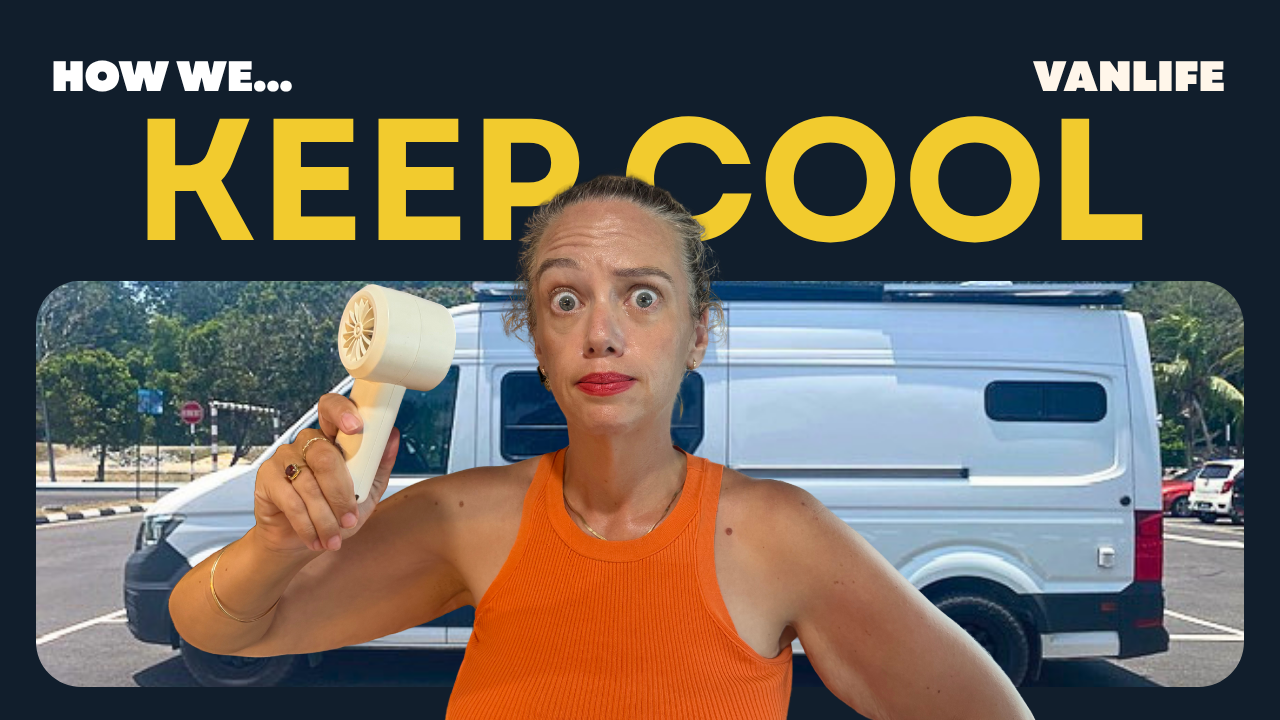
When we built It Zwibble, our seven-metre VW Crafter campervan, there was one fairly major thing we decided not to install.
Air conditioning.
At the time, that seemed entirely reasonable.
Then we drove through Southeast Asia.
Malaysia was our first real test. We were living full-time in the van in heat and humidity very different from the conditions we’d built it for in New Zealand, and once the engine was switched off, so was the vehicle’s air conditioning.
We didn’t discover one clever solution that suddenly made the van cool. Instead, we’ve gradually built up a collection of strategies, some designed into It Zwibble from the beginning and others learnt through experience.
By the time we’d travelled through Malaysia, Thailand and Laos, we’d become considerably better at keeping both the van and ourselves reasonably comfortable.
Not cold. Comfortable.
There’s a difference.
First, we try to keep the heat out
The easiest heat to deal with is the heat that never gets inside.
It Zwibble was well insulated when we built it. There is PIR insulation beneath the floor and wool insulation through the walls and ceiling. We originally thought about insulation largely in terms of keeping warmth inside in colder climates, but in Southeast Asia we’ve relied on it to slow heat moving in the opposite direction.
Windows are another obvious source of heat.
We have insulated covers for the windows throughout the living area and the cab. During the hottest parts of the day we’ll often put them up, even though it can feel slightly ridiculous sitting in a darkened campervan in the middle of the afternoon.
It’s still preferable to sitting in an oven.
But one of the biggest lessons we’ve learnt has nothing to do with equipment.
It’s where we park.
Shade isn’t as simple as it sounds
“Park in the shade” seems like fairly obvious advice for keeping a campervan cool.
For us, there’s a complication.
Our entire electrical system relies heavily on the 1,200 watts of solar panels on It Zwibble’s roof. If we hide the van under dense trees all day, we might stay cooler but lose much of our ability to generate power.
At Pantai Air Papan near Mersing, we started paying much more attention to how the sun moved around a park-up. We found a position where trees shaded much of the van, while an opening still allowed sunlight to reach the roof for part of the day. Later, once our batteries were generally well charged, the shade moved across the van.
It changed the way we looked at somewhere to park.
We now think about where the sun will rise and set, which side of the van will receive direct sunlight, whether there’s likely to be a breeze and what the surface underneath us will do.
A huge concrete car park can absorb heat all day and radiate it back at us. Somewhere beside water may give us a breeze. A beach can be substantially more comfortable than a sheltered urban car park.
We’re not simply looking for shade. We’re looking for a park-up that keeps us reasonably cool while still allowing our home to function.
Our MoonShade awning gives us another option. We can shade the side of It Zwibble, particularly around our large sliding door, without covering the solar panels on the roof.
Move as much air as possible
Eventually, the heat gets in.
That’s when airflow becomes important.
We installed two MaxxAir roof fans when we built It Zwibble, and they’ve become some of the most useful equipment in the van. By changing which windows are open and whether each fan is drawing air in or extracting it, we can create airflow through the living space and bedroom.
It works particularly well when there’s cooler air outside to draw in.
The problem comes when the outside air is also hot and humid.
At that point, there’s a limit to what ventilation can achieve. Sometimes you’re simply moving hot, sticky air around more enthusiastically.
Megan bought a small handheld fan early in our time in Malaysia. Being able to direct air straight onto your face sounds like a tiny thing, but when you’re sitting in a stationary van in tropical humidity, tiny things start to matter.
We changed our day
One of our most effective adaptations required no modifications to the van at all.
We changed when we do things.
If we have a driving day, we’ll often drive through the hottest part of the afternoon. We’re going to spend those hours sitting somewhere anyway, and while It Zwibble is moving we have the cab air conditioning running.
Because our cab opens directly into the living space, driving also helps cool the rest of the van.
Technically, therefore, It Zwibble does have air conditioning.
We just have to drive to use it.
When we don’t need to drive, sometimes the sensible solution is simply to leave.
In Malaysian cities we often used the hottest part of the afternoon to work from an air-conditioned café or shopping mall. We’d explore outdoors earlier or later, then come back to the van once the temperature had started dropping.
There’s no prize for sitting inside a campervan suffering just because it’s your home.
Sometimes it’s easier to cool ourselves
Cooling seven metres of campervan is difficult.
Cooling two humans is considerably easier.
We’ve changed what we wear. Lightweight, breathable or moisture-wicking clothes make a noticeable difference, particularly on days when the humidity makes everything feel hotter.
Sleeping was one of our bigger challenges, so we added a cooling mattress protector and cooling pillow protectors. They don’t turn the bed cold, but we’ve found them more comfortable.
We’ve accumulated other cooling products as we’ve travelled. Japan introduced Megan to cooling sprays and wipes. Southeast Asia introduced us to Snake Brand prickly heat powder and spray.
One of our most effective solutions costs almost nothing.
We dampen small facecloths and put them in the freezer.
When we’re really hot, one of those across the back of the neck, face or shoulders is fantastic.
And sometimes the obvious solution really is the best one.
Have a cool shower.
It doesn’t lower the temperature inside It Zwibble, but it makes being inside It Zwibble considerably more pleasant.
Don’t make the van hotter than it already is
We love having a proper kitchen in the van.
We don’t always love using it when it’s extremely hot.
Our induction cooktop adds heat to an already warm space, so on particularly hot evenings we’ll change what we eat. Sometimes dinner is something cold and easy.
Cheese and crackers has happened more than once.
There is another advantage to travelling in Southeast Asia: eating out can be extremely affordable. Sometimes having somebody else cook dinner isn’t only more interesting, it’s cooler and easier too.
Yes, we eventually bought an “air conditioner”
Despite all of these strategies, there were days when we still wanted something more.
In Thailand, we bought a small portable evaporative cooler from Mr DIY for around NZ$15.
Calling it air conditioning is generous.
We add water, plug it into a USB-C battery bank and use it to direct slightly cooler air towards us.
Was it worth buying?
Probably.
Did it transform It Zwibble into an air-conditioned motorhome?
Absolutely not.
That’s an important distinction. Small personal cooling devices can help the person sitting in front of them, but they’re not going to cool an entire seven-metre van in tropical conditions.
Our home has wheels
Eventually we realised there was another cooling strategy available to us.
Leave.
One of the great advantages of living in a vehicle is that we’re not permanently attached to the climate we’re currently experiencing.
Sometimes that simply means choosing a breezier park-up.
Sometimes it means changing our route.
Altitude can make an enormous difference. If we’re choosing between two places and one is considerably higher and cooler, temperature can now influence where we go.
We noticed that dramatically when we drove into Malaysia’s Cameron Highlands. After weeks of thinking constantly about heat and airflow, we arrived somewhere where the evening temperature was around 19°C and found ourselves discussing whether we needed the duvet.
We didn’t.
But it was lovely to have the problem.
Would we install air conditioning if we built It Zwibble again?
Probably, yes.
When we built the van in New Zealand, the air-conditioning options now available to campervan builders weren’t as accessible to us. Having travelled through tropical Asia, both of us think we’d seriously consider installing a proper system if we were starting the build again.
That doesn’t mean it’s a straightforward decision.
A roof-mounted unit would compete with our solar panels for roof space, and we currently have 1,200 watts up there. Air conditioning also has significant electrical demands, which means battery capacity becomes part of the equation.
Our current system has got us through Southeast Asia. We’ve learnt to manage the heat, alter our days and use the advantages of having a home that can move.
But managing the heat and having a genuinely cool home are not the same thing.
If we were building again, we’d at least make room in the design process for that conversation.
What we’ve learnt about vanlife in the tropics
Living in a campervan in tropical heat hasn’t required one big solution. It has required dozens of small decisions.
We think about the sun before we park. We balance shade against solar generation. We use our roof fans and windows to move air. We change when we drive and when we explore. We cool ourselves rather than always trying to cool the entire van. We avoid creating unnecessary heat inside.
And sometimes we drive somewhere cooler.
None of that makes tropical vanlife effortless, but it has made it workable.
And we’re still learning.
Leave a Reply