MALAYSIA
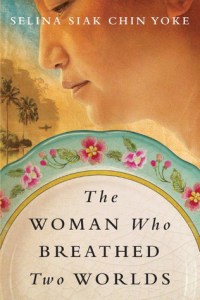
The Woman Who Breathed Two Worlds by Selina Siak Chin Yoke is a richly detailed historical novel set in colonial Malaya, loosely inspired by the author’s own family history. I read it while travelling through Kota Bharu, one of Malaysia’s more traditional states, which gave the novel an added sense of resonance. There was something fitting about reading a story so grounded in tradition, family structures, and cultural continuity while moving through a part of the country where those influences still feel strongly present.
The novel follows Chye Hoon across decades of social and personal upheaval as she navigates marriage, motherhood, loss, and survival within the expectations placed upon women of her time. While large historical shifts sit in the background, this is ultimately a domestic story, concerned less with grand political events and more with the rhythms and tensions of family life.
One of the strongest aspects of the novel is its portrayal of Nyonya culture, something uniquely Malaysian and not often explored in mainstream fiction. Selina Siak Chin Yoke writes with an impressive level of cultural specificity, weaving food, customs, spiritual beliefs, household rituals, and social expectations naturally into the story. Nyonya food in particular becomes central to the novel, especially as Chye Hoon increasingly supports her family through cooking and selling food. The connection between food, labour, identity, and survival felt especially vivid while travelling through Malaysia myself.
I had mixed feelings about the novel overall. I appreciated the way modern ideas slowly began to enter Chye Hoon’s world, creating tension between tradition and change. Some of the most compelling moments came from watching those shifts emerge gradually across generations rather than through dramatic events.
I also particularly loved the friendship between Chye Hoon and her close friend Siew Lan. Their relationship brought warmth and emotional depth to the novel and felt like one of its most authentic portrayals of enduring adult female friendship. In contrast, I found Chye Hoon’s relationship with her eldest son deeply frustrating. She pours so much love, sacrifice, and hope into him, only for him to repeatedly disappoint her, and at times I found myself more exasperated than sympathetic.
Chye Hoon herself was also a somewhat difficult protagonist for me to fully connect with. There is an emotional reserve to her character that occasionally made her feel distant, almost as though she were concealing parts of herself from both the people around her and the reader. Rather than creating greater empathy, I sometimes found this made her harder to fully understand or like.
The pacing is patient and reflective, which will suit some readers more than others. This is not a fast-moving historical drama filled with twists, but a slow unfolding of domestic life, sacrifice, endurance, and generational change. While I admired much of what the novel was doing, I also found myself comparing it to other Malaysian-set novels I’ve connected with more strongly.
Even so, I’m glad I read it while travelling through Malaysia. Fiction like this adds texture to travel in a way guidebooks cannot. It deepened my understanding of the cultural layers, histories, and traditions that continue to shape the country today.
I’d recommend this novel to readers who enjoy immersive historical fiction, multigenerational family sagas, and stories strongly grounded in culture and place, particularly those interested in Peranakan and Nyonya history. While it ultimately wasn’t a favourite read for me, I still found it thoughtful, culturally rich, and valuable for the window it offered into a uniquely Malaysian world.
Rating: ★★★★
 The Peterson Odyssey
Leave a comment