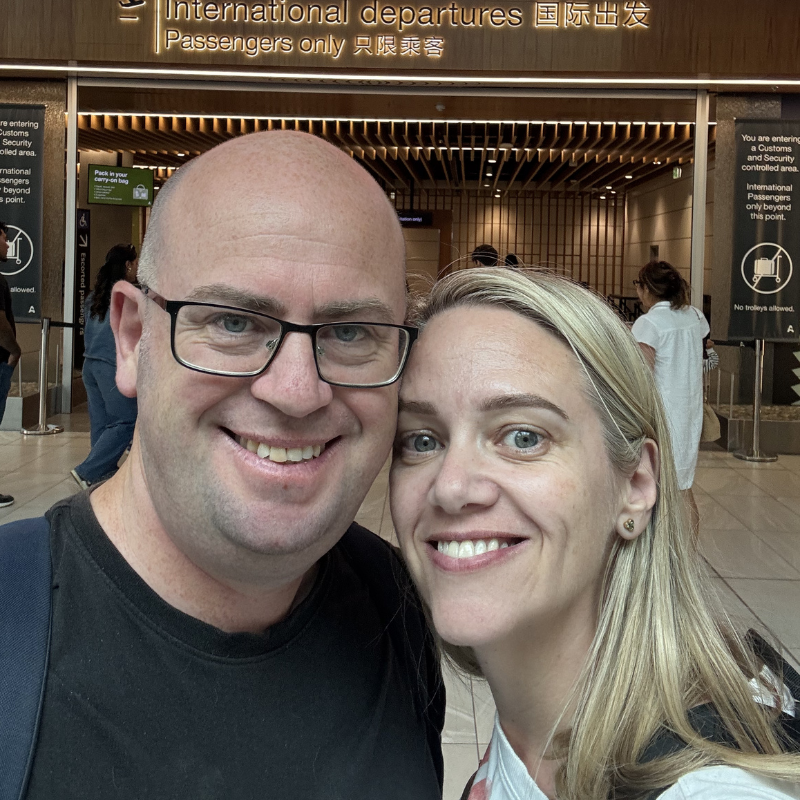
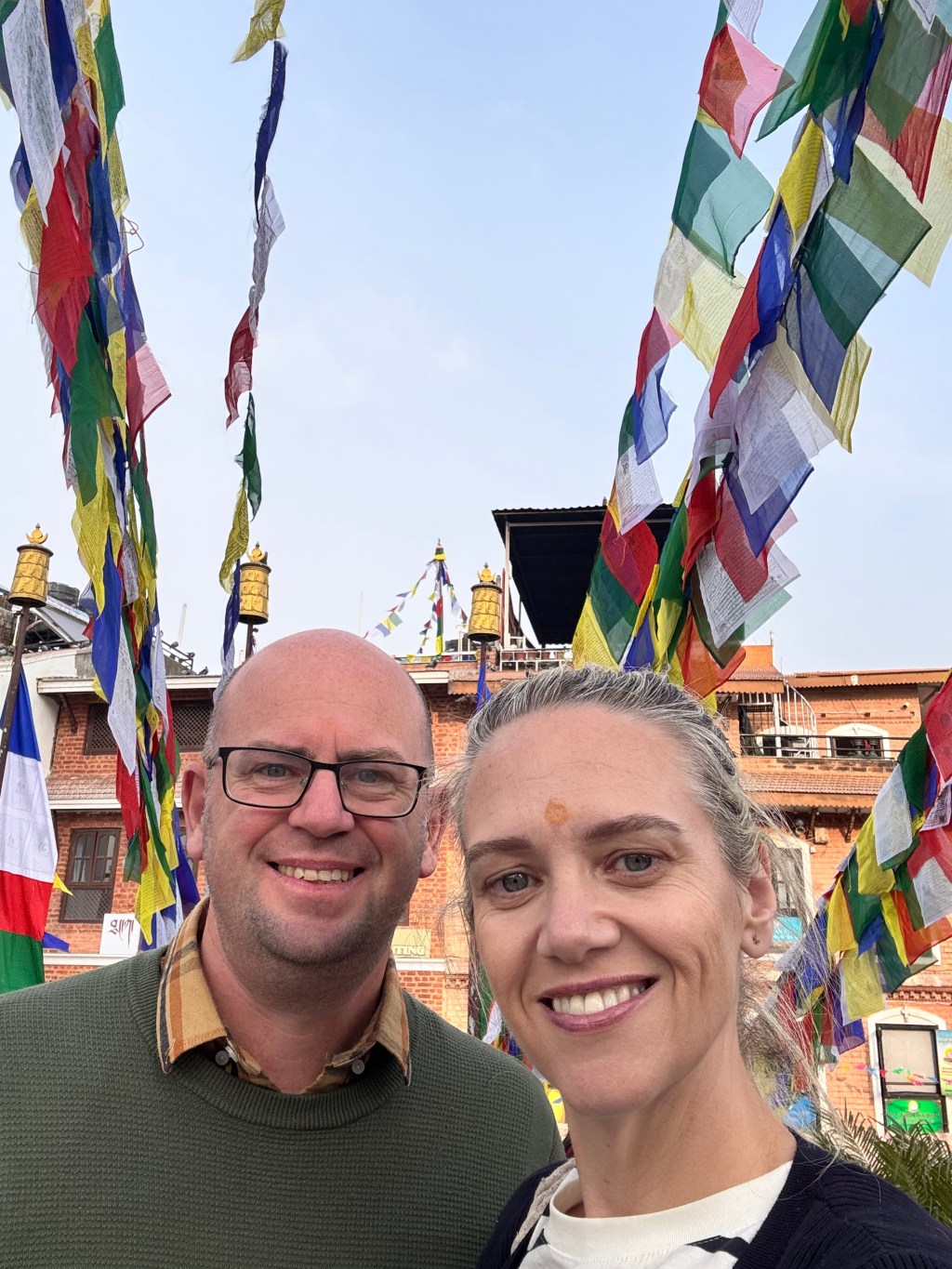
Nepal had been sitting in my imagination for years before we ever got there.
I think for a lot of New Zealanders, there is something about Nepal that feels strangely close, even before you arrive. Maybe it is Everest. Maybe it is Edmund Hillary. Maybe it is just that the mountains loom so large in our sense of adventure. Whatever it is, Nepal felt significant before we had even stepped off the plane.
Of course, in classic Peterson Odyssey fashion, we did not arrive the way we had planned.
The original idea had been to drive up through India in the van. Instead, our van was still doing its own mysterious delayed journey elsewhere, so Darryl and I flew into Kathmandu and joined an organised tour. That was not the plan, but by this point in our trip we were getting quite practised at accepting that the romantic version of overlanding and the actual version are not always the same thing.
And Nepal, as it turned out, was absolutely worth pivoting for.
Kathmandu
Kathmandu hit us all at once.
Kathmandu is one of those places that does not ease you in gently.
It is noise and movement and dust and traffic and temples and people and prayer flags and shopfronts and wires and incense and motorbikes and horns, all layered on top of each other. It feels dense, not just physically, but historically and spiritually too. There is so much going on that your brain almost gives up trying to rank what matters most.
We started with a mountain flight, because apparently our approach to Nepal was: no gentle warm-up, straight to the Himalayas.
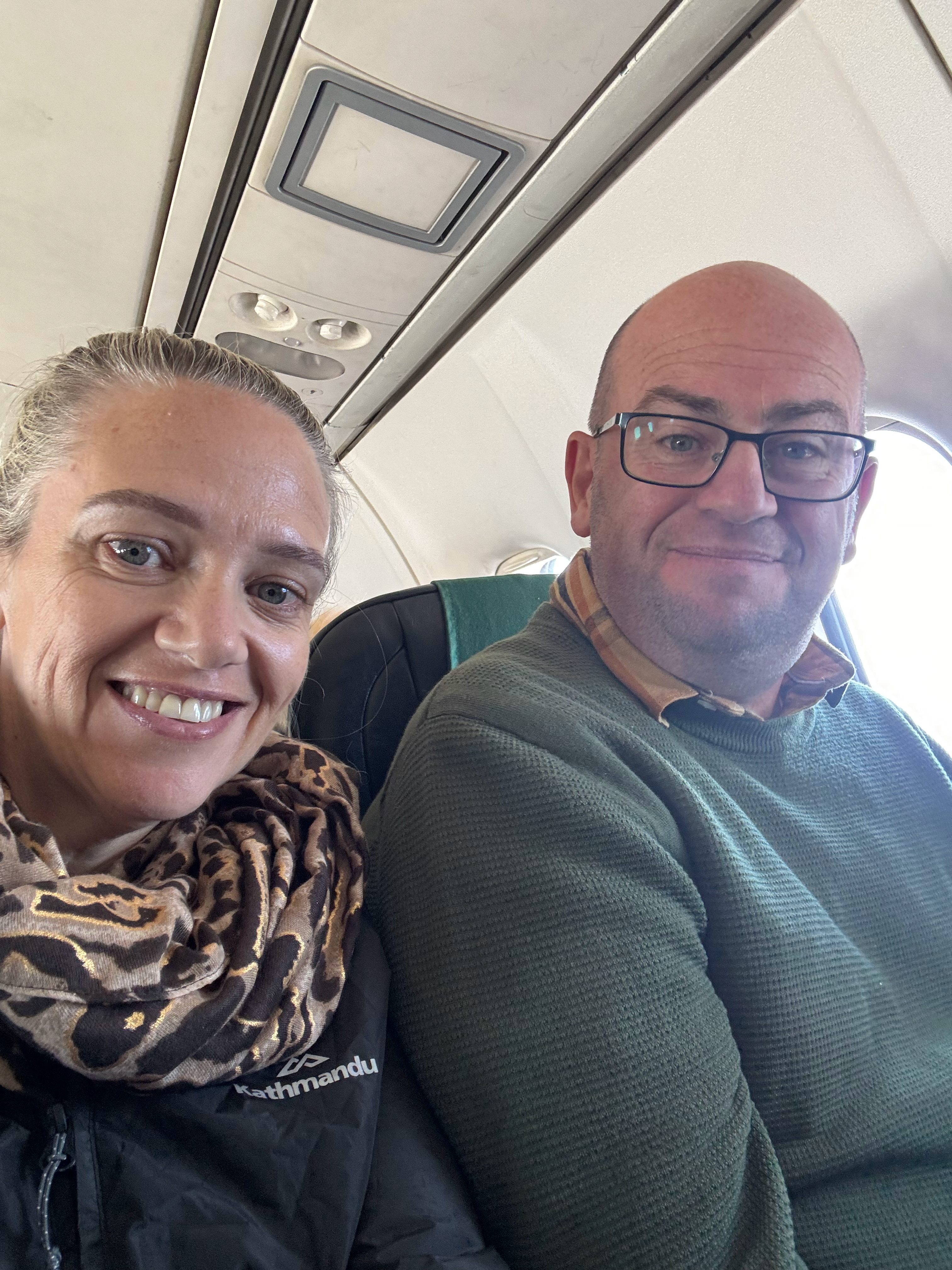
And honestly, it was incredible.
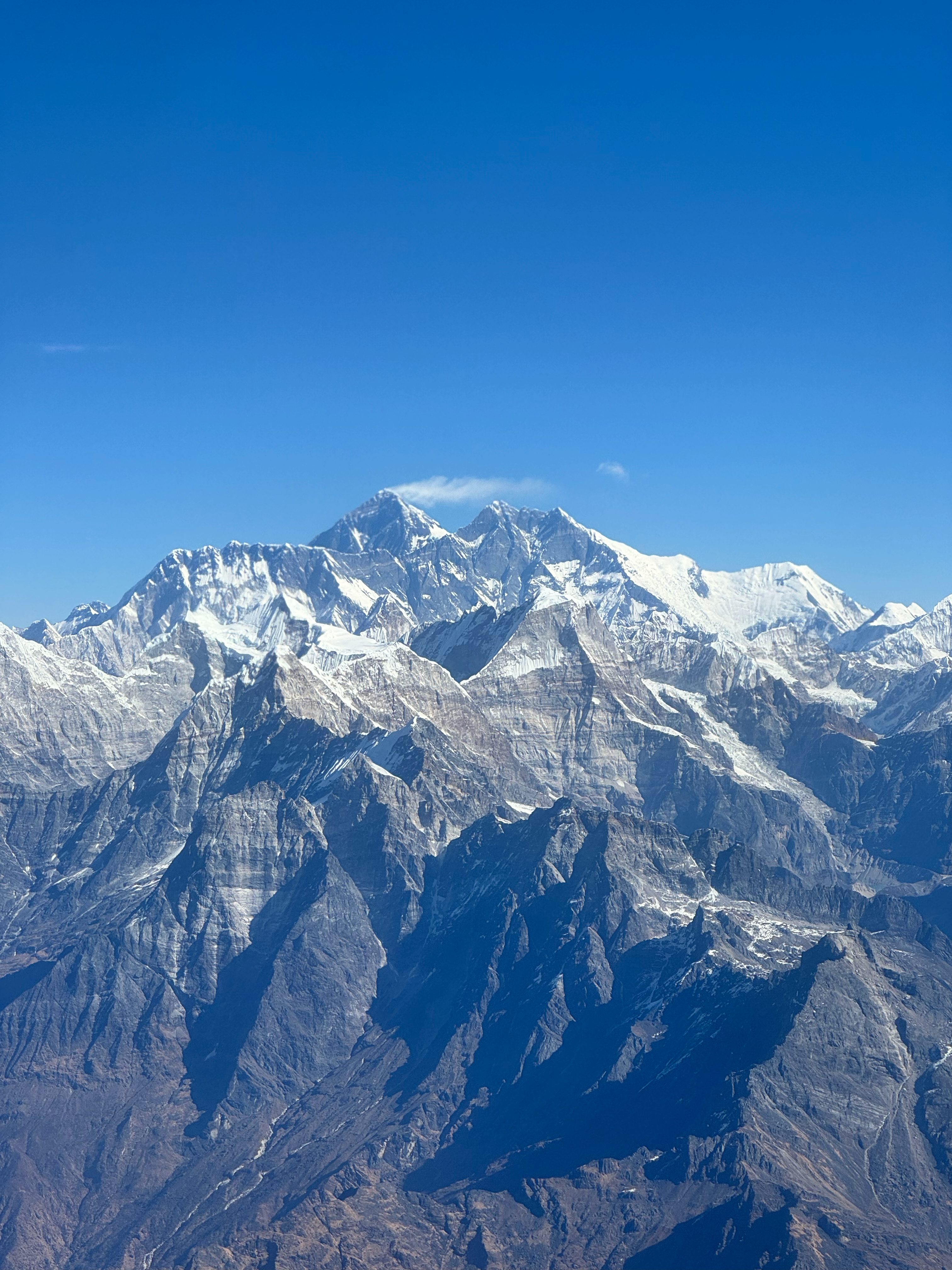
We paid about USD $240 each, which is not cheap, but I knew even before we boarded that it was probably going to be worth it. I am never climbing Everest. I know myself well enough to say that with absolute certainty. So getting up into the air and seeing those mountains properly felt like our version of the experience. They handed out these little guides on the plane so you could work out what you were looking at, which I loved. It felt very organised in a way that was reassuring when you are about to peer out at one of the most famous mountain ranges in the world and pretend you know which peak is which.
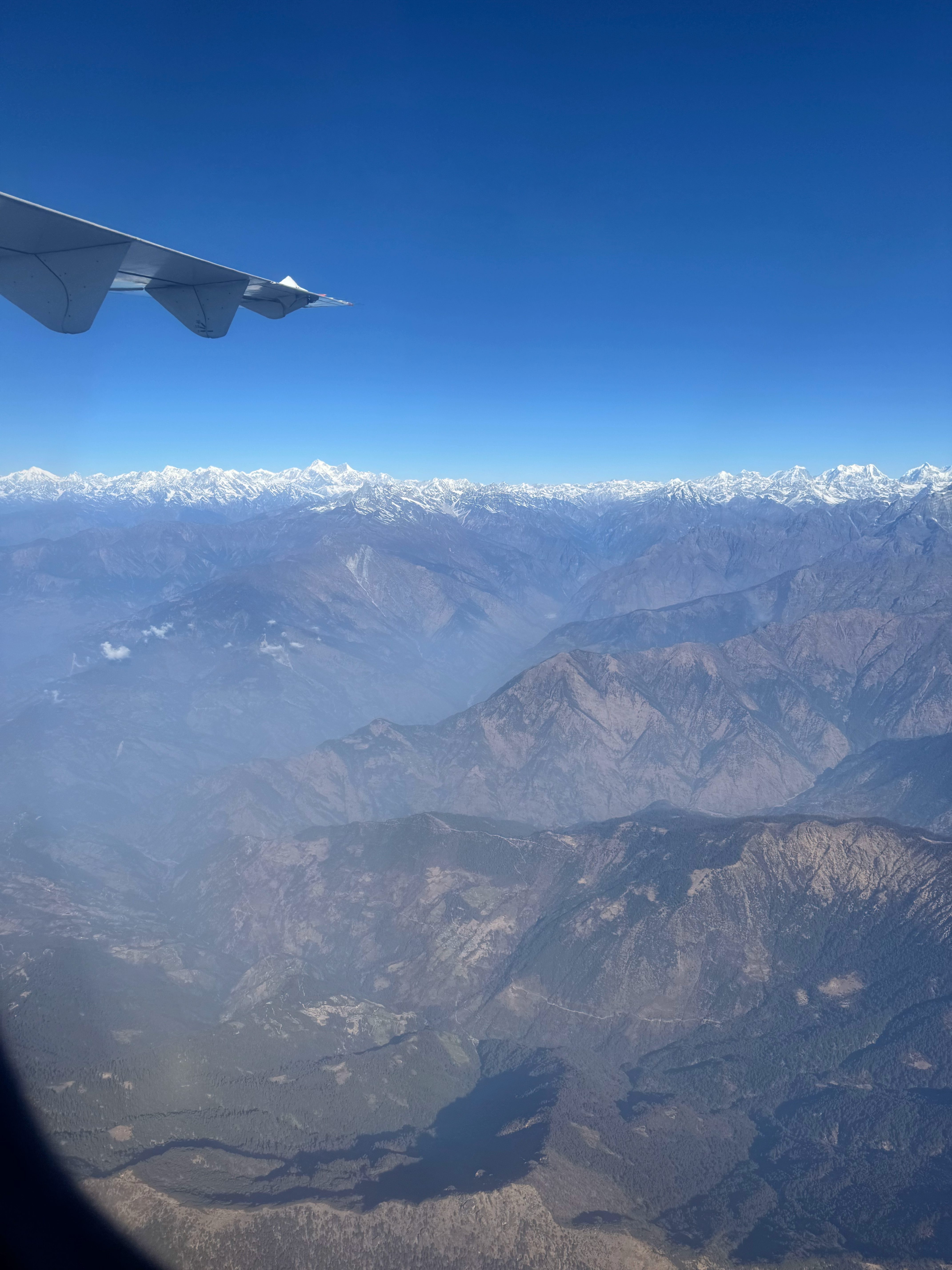
There is something almost ridiculous about the Himalayas when you see them like that. They do not look real. They look painted, or staged, or like the sort of thing you would accuse a video editor of overdoing. And yet there they were, stacked up behind each other, immense and indifferent and totally unconcerned with the fact that I was having a bit of an emotional moment in a tiny plane seat.
That flight alone would have made the trip memorable.
But then Kathmandu itself began unfolding.
Durbar Square was one of those places where history does not sit still
Kathmandu Durbar Square is not the sort of place where you stroll around and think, “what a nice old building”.
It is alive. That was what struck me.
Yes, there are temples everywhere. Yes, there is extraordinary wood carving and architecture and layers of royal history. But it did not feel preserved in a glass case. It felt used. It felt inhabited. It felt like belief and ritual and daily life were still happening around us rather than being performed for tourists.
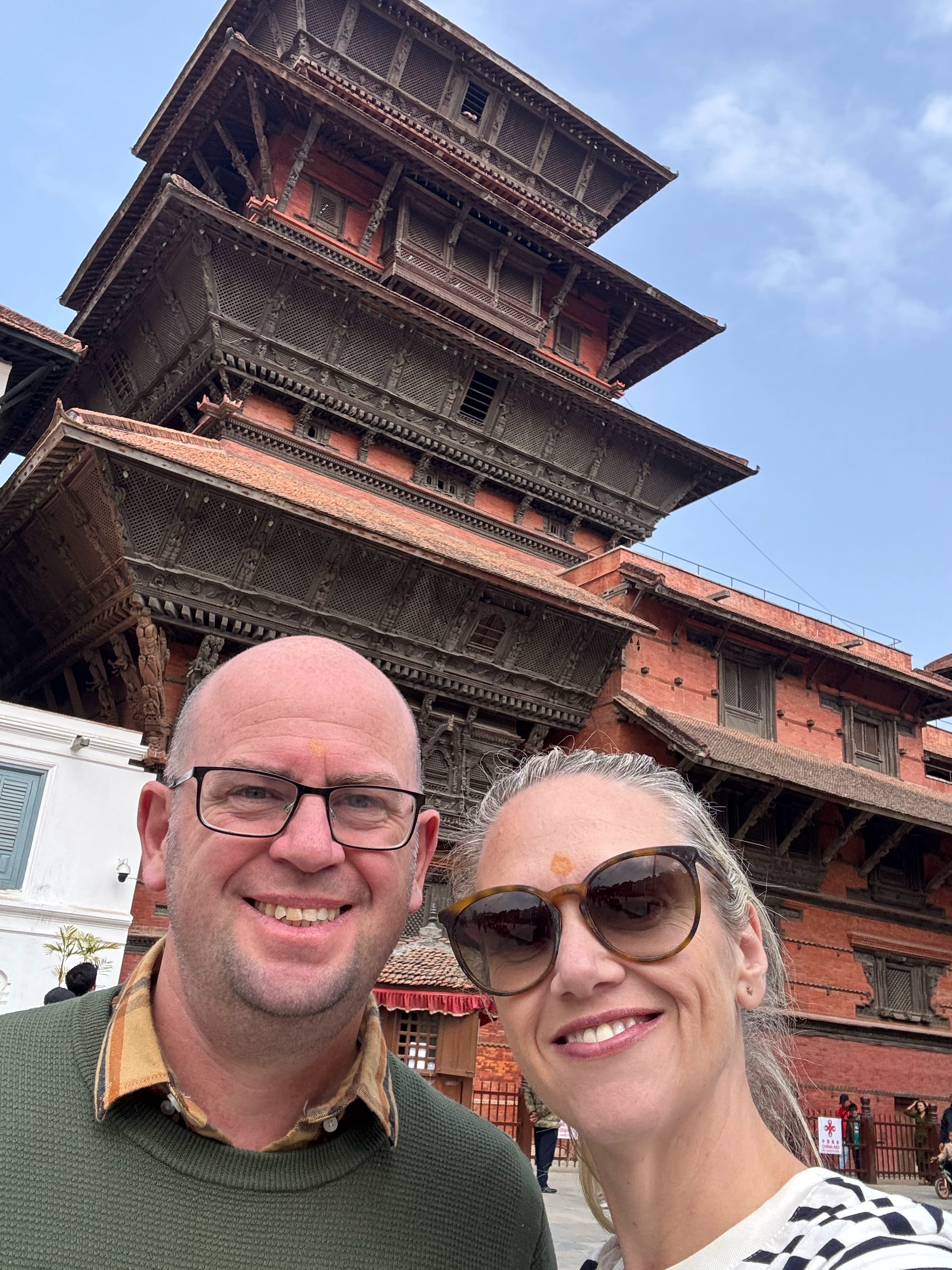
We went to Kumari Ghar, where the Kumari lives. She is the living goddess, embodied in a young girl, and we were lucky enough to see her. We could not film, obviously, and nor should we have, but it was one of those moments that lodges in your mind because it is so unlike anything we had encountered before. There is no neat Western frame for it. You just have to stand there and let it be what it is.
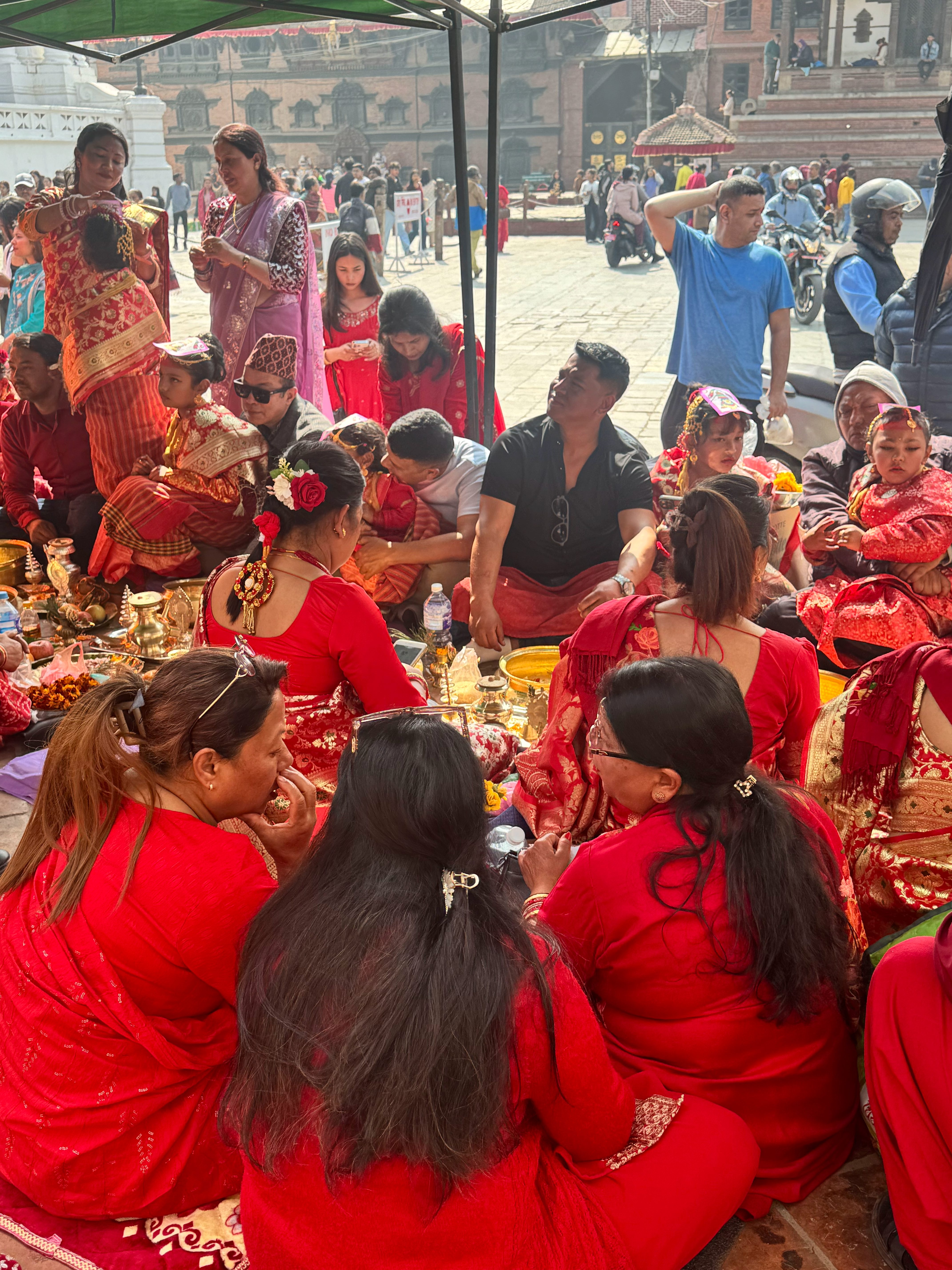
We also happened to be there on an auspicious day for the Newar people of the valley, and there was this whole coming-of-age ritual happening for young girls. They were dressed beautifully, families were gathered, and there was this sense of ceremony and continuity that made the whole square feel even more layered than it already did. It reminded me a little of Catholic ritual, in that communal, symbolic, milestone sort of way, though obviously it was its own thing entirely.
And then there was the old palace, with its narrow staircases and strategic lookout points and all the mental images it prompted. I loved that part. I am always drawn to places where you can still feel how power worked physically. The steep stairs, the elevated viewpoints, the defensive advantages, the sense that architecture was never just decorative. You could imagine soldiers thundering up and down those staircases, and meanwhile there we were ducking under beams and reading “mind your head” signs while trying not to trip over our own feet.
Monkey Temple was not subtle, and that is partly why I liked it
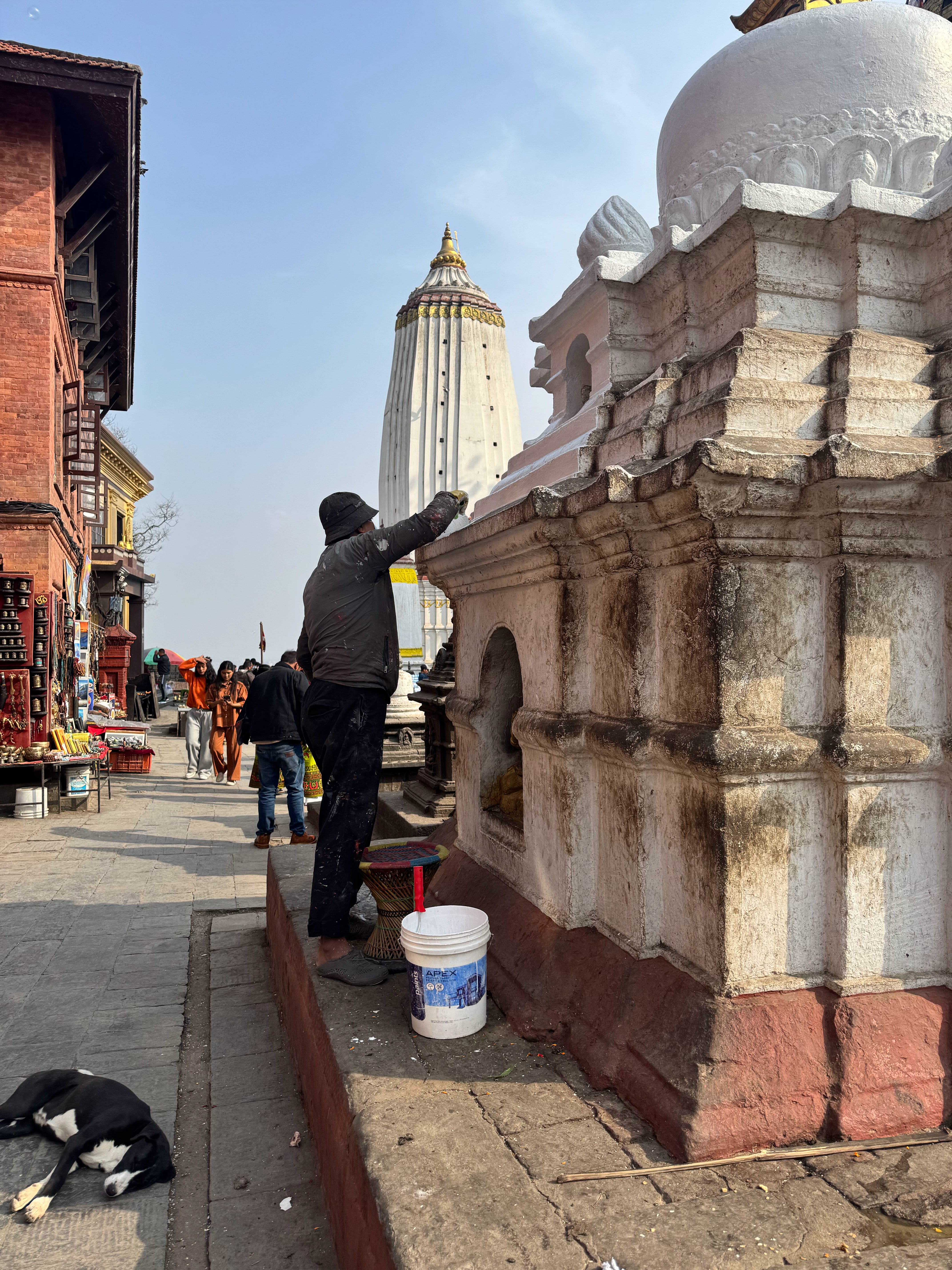
We then went to Swayambhunath, better known as Monkey Temple, and it was exactly the kind of place I wanted it to be.
Busy. Chaotic. Sacred. Slightly feral.
The monkeys do, in fact, take the branding seriously. They are everywhere, darting around, climbing over things, generally behaving as though the whole hill belongs to them, which to be fair it probably does more than it belongs to any of us.
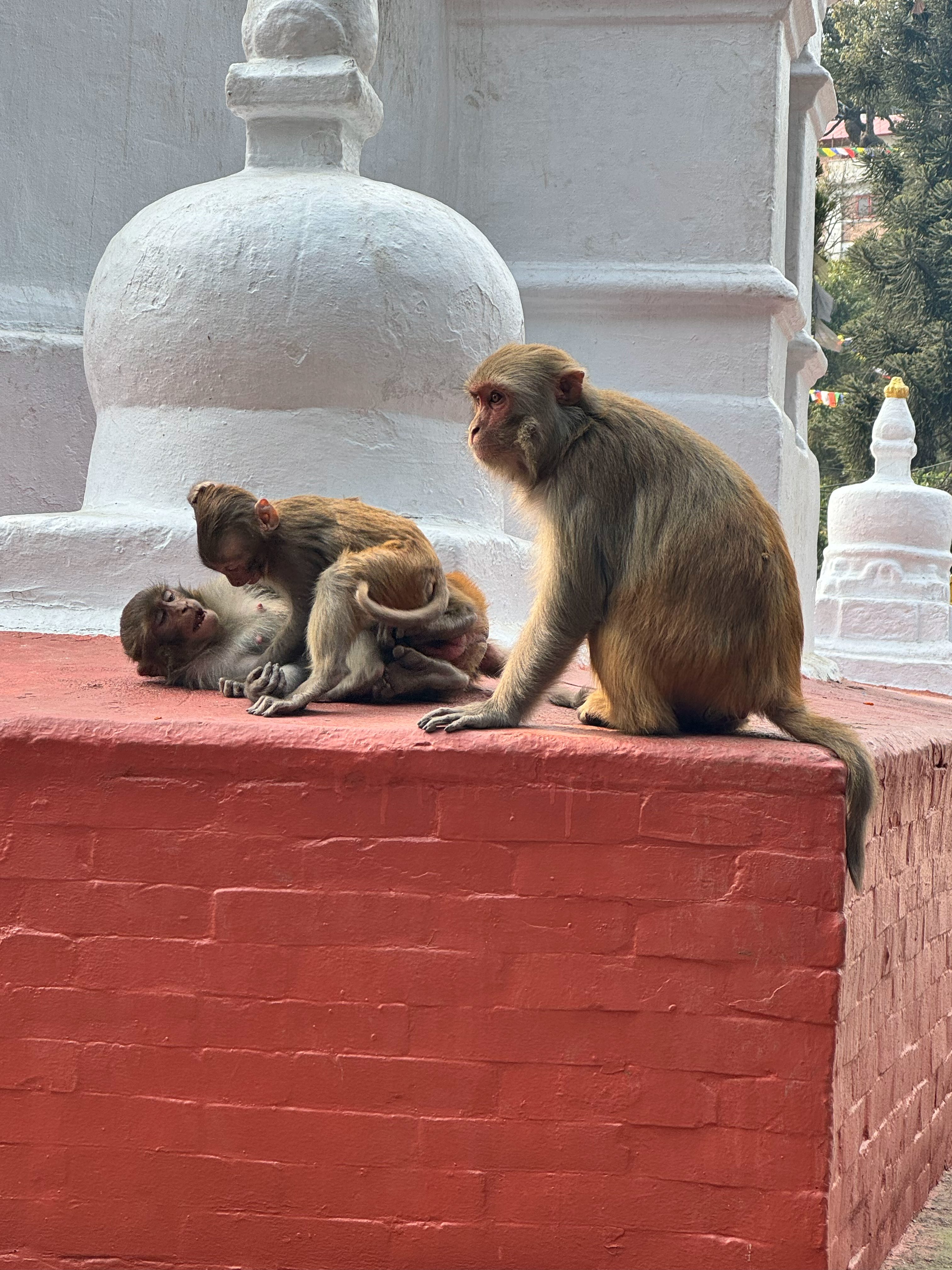
What I liked about Monkey Temple was that it felt like a place of layers. You climb, and you watch, and you circle, and all the while there is movement happening around you. Prayer flags stretching across the air. People worshipping. Tourists panting up the steps. Monkeys being absolute opportunists. It was one of our first real encounters with Buddhist spaces in Nepal, and I remember feeling like I was learning by immersion rather than by explanation. That happened a lot in Nepal. The more temples and stupas we visited, the more the stories began connecting. At first it feels like fragments. Then slowly the puzzle pieces start falling together.
Boudhanath was my favourite place in Kathmandu, maybe in all of Nepal
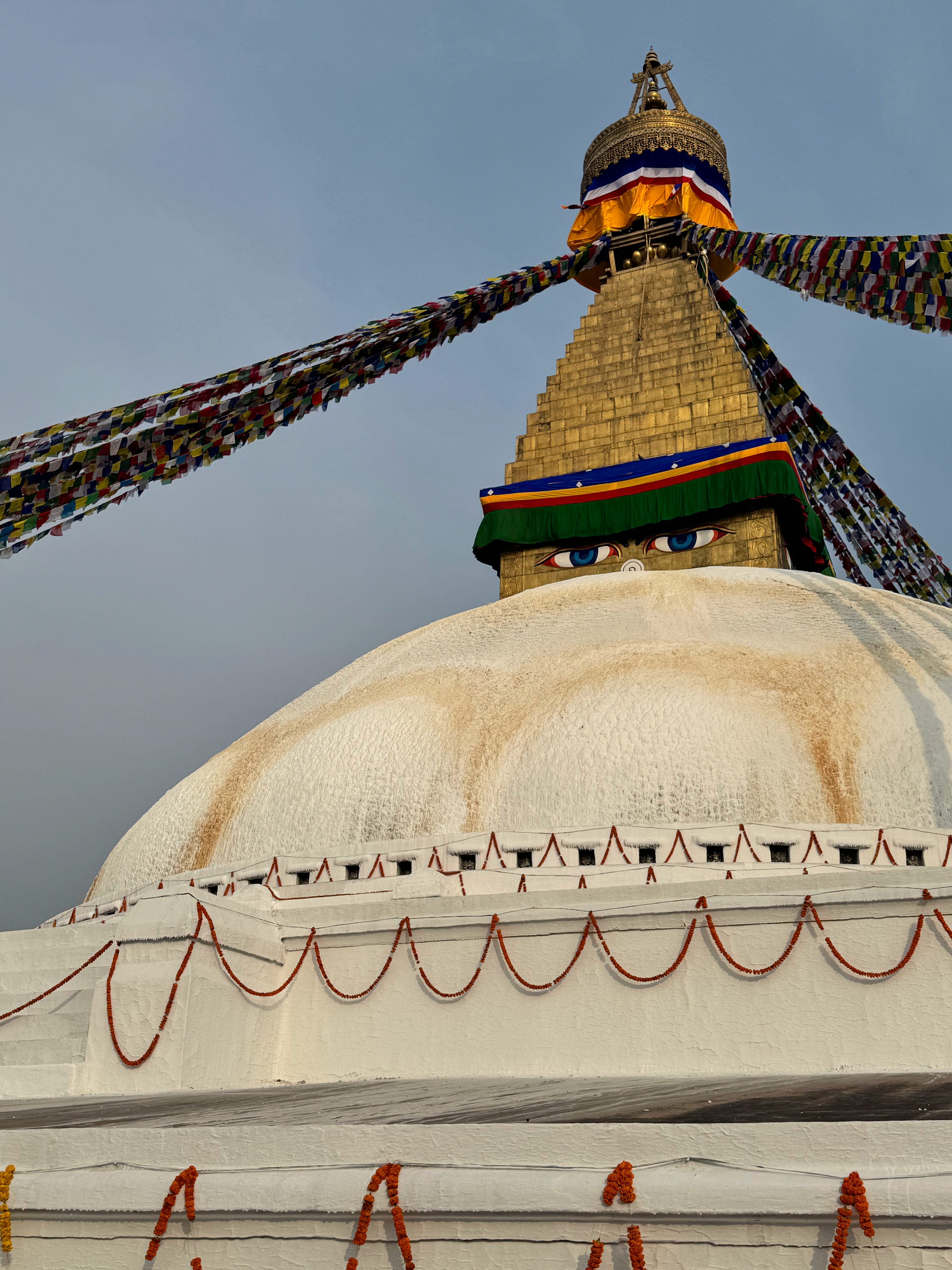
If Monkey Temple had energy, Boudhanath had peace.
The stupa itself is enormous, but it is not just the scale that stays with you. It is the atmosphere. Pilgrims moving around it in steady circles. Prayer wheels turning. Butter lamps. The low hum of devotion. Even with tourists around, it still felt calm in a way that reached right into my nervous system and told it to settle down for five minutes.
I really loved it there.
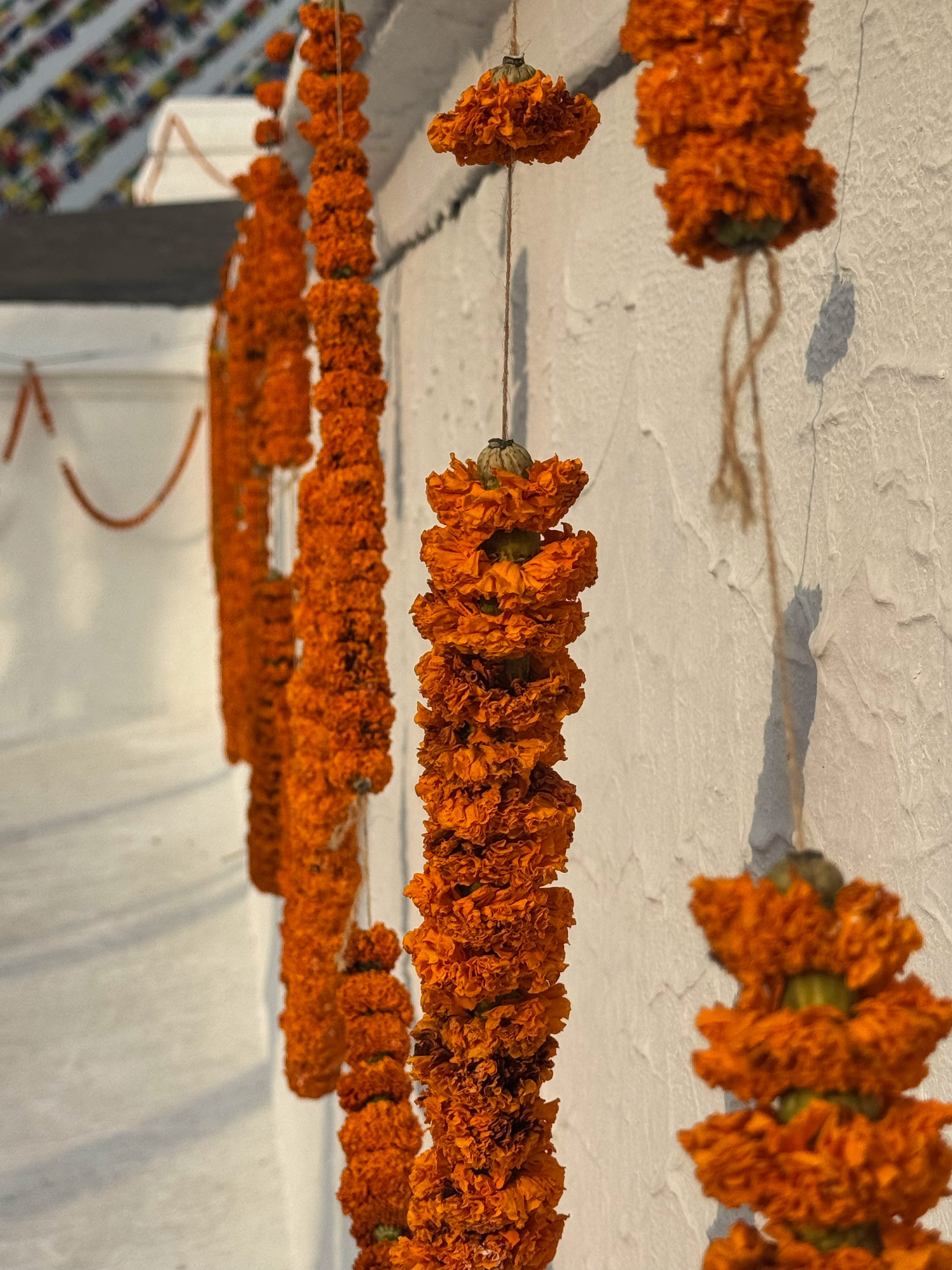
There was something deeply grounding about watching people move around the stupa, again and again, as part of their own practice and faith, while we were just there trying to take it all in. It did not feel performative. It did not feel curated. It just was. And I think that is what I kept appreciating in Nepal. So much of what we saw was not put on for outsiders. We were the outsiders, peering into spaces that were already full of meaning long before we turned up with cameras.
Pashupatinath
One of the final places we visited was Pashupatinath.
We had skipped it earlier because I was not feeling great, so we came back to it later, not really knowing what to expect. What we found was a sacred site that is also a place of cremation, and once we realised the full significance of what we were seeing, it changed how we moved through the space.
We chose not to film the cremations.
That felt obvious.
Sometimes as travellers, especially as people documenting things, you come up against the line between witnessing and intruding. This was one of those times. We watched, we listened, we learned, but some things are not content. Some things belong to the people living them.
It was one of the most confronting places we visited in Nepal, but also one of the most important.
Chandragiri, where the clouds absolutely ripped us off
Day two took us up the Chandragiri Hills cable car, which was great fun in itself. You rise quickly, your ears pop, and you head up above the valley with all these grand ideas about sweeping Himalayan views.
The problem, of course, was cloud.
Nepal taught us this repeatedly: you can make all the plans you like, but the mountains will reveal themselves only if they feel like it.
So there we were, at altitude, peering hopefully into thick cloud and making the best of it. It was still worth going. The cable car ride was cool, the temple up there was lovely, and there is something quite satisfying about being above the cloud line even when the grand reveal does not happen.
But yes, we were definitely robbed a little.
Pokhara
Pokhara felt like Nepal exhaled. It was greener, calmer, more spacious, and at times it reminded me so much of New Zealand that it gave me a weird little jolt. There is a softness to the lake, the hills, the trees, the air, that made it feel gentler than Kathmandu. Not boring, just gentler.
Our guide there, Tulsi, was brilliant. By this point we had visited enough temples and holy places that all these different stories and gods and symbols were beginning to overlap in my mind, and Tulsi had this lovely way of filling in the gaps so it all started making more sense.
We visited temples, river gorges, caves, bridges, museums, waterfalls, lakes. It sounds like too much when I write it down, but somehow it worked.
One stop I really enjoyed was the Seti River Gorge. There is something wildly satisfying about a place where water has just quietly done outrageous geological work over time. The gorge is narrow but deep, carved down by the force of water, and standing there looking at it you get that nice reminder that nature does not need to be dramatic in the obvious sense to be impressive.
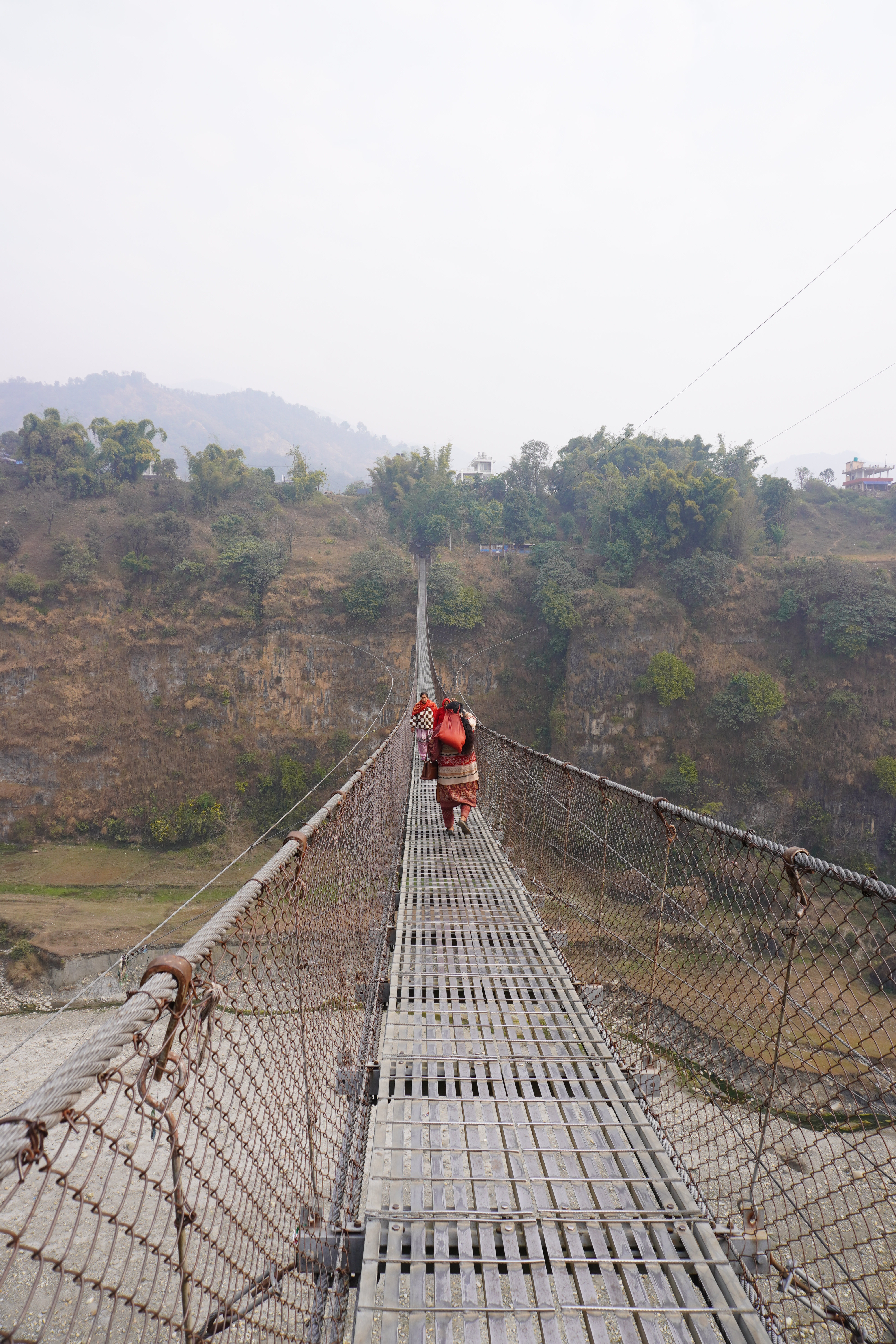
We also crossed a hanging bridge which, as always, I approached with the appropriate combination of curiosity and mild mistrust. But it was great. Those sorts of places are at their best when they are not polished within an inch of their lives. You want to feel that slight wobble. You want to know you are actually in it.
Bats, caves, and going underground
One of the things I had not really associated with Nepal before visiting was caves, and yet somehow Pokhara gave us three.
Mahendra Cave was beautiful in that damp, dim, ancient sort of way, with stalactite formations that locals have interpreted as different gods. Inside was a temple, and one of the attendants gave me a blessing, which I accepted very happily. Darryl was less spiritually involved than I was, but that tracks.
Then there was the bat cave, where the smell hit first.
Nothing really prepares you for the smell of huge numbers of bats hanging above your head. It is one of those experiences that is both disgusting and fascinating, which is a category of travel moment I find myself in surprisingly often.
The third cave, down towards the underground waterfall, was probably the most striking. There is something dramatic about descending through a sacred space and then emerging into this watery underworld where the force of the falls is echoing off the rock. That was properly memorable.
We finally got the mountain view in Pokhara, and it felt earned
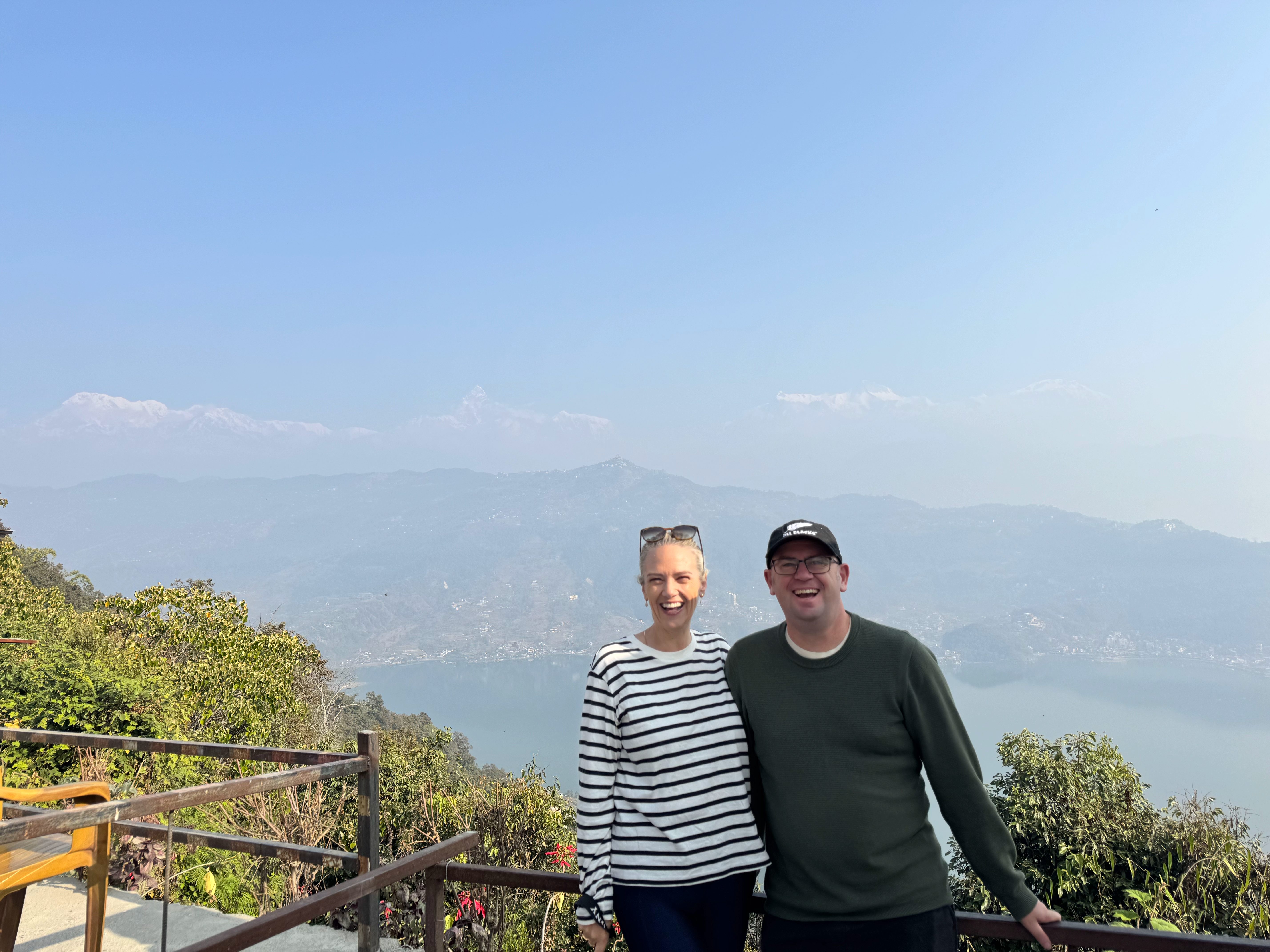
After enough cloud-based disappointment to make us suspicious of all viewpoints everywhere, we finally got a proper look at the Annapurna range.
And there it was. The Himalayas again. Clearer. Closer. Worth the early start.
There is a particular kind of joy in seeing mountains after you have already been denied them a few times. It makes you feel as though you have somehow passed a test.
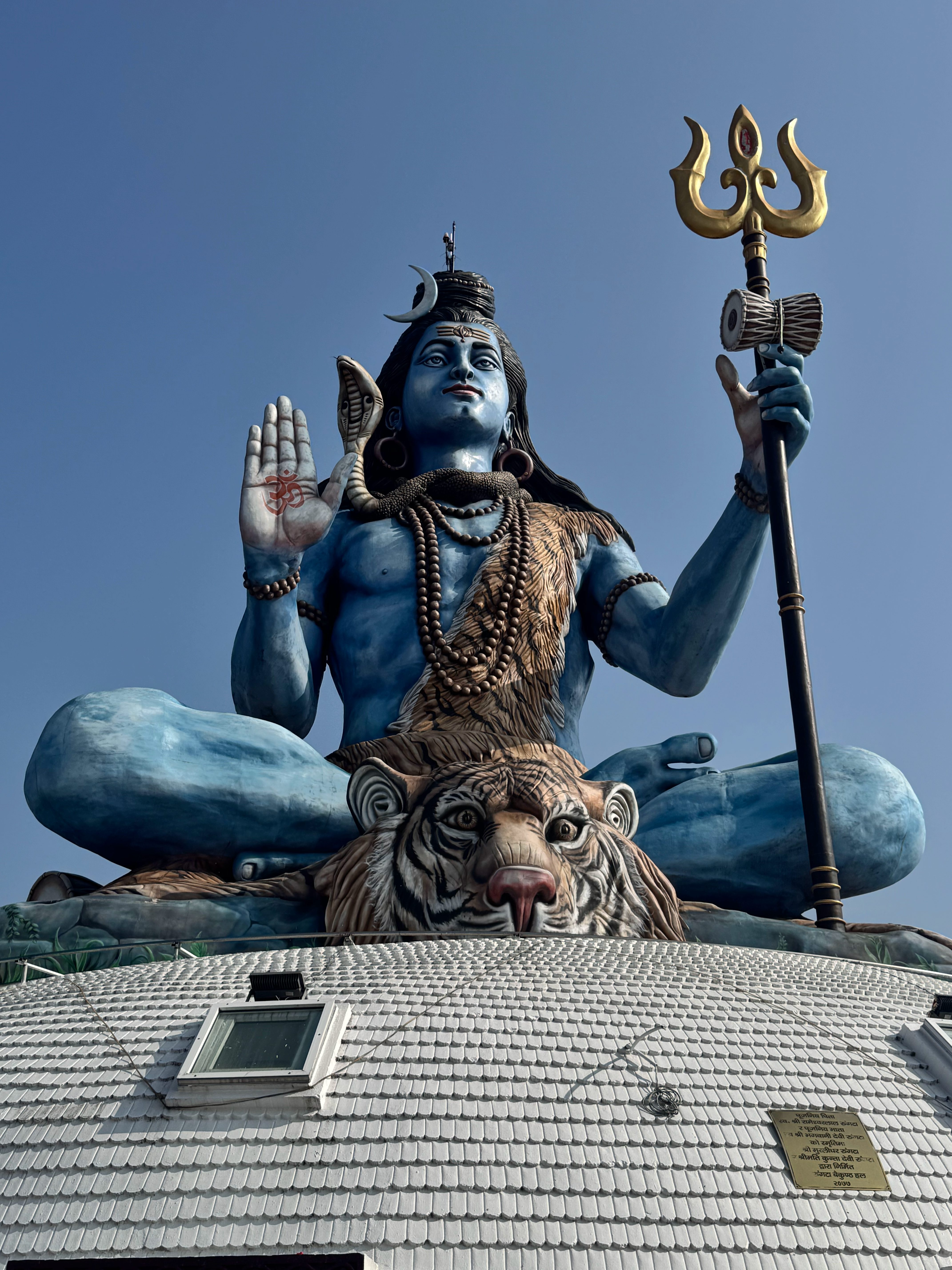
We also visited the giant Shiva statue, which I had assumed would be centuries old because apparently I had made up my own backstory. It is not. It was completed in 2021. Still enormous, still striking, still worth seeing, but definitely not the ancient relic I had lazily imagined. Nepal kept doing that too. It would hand you something deeply historic, then something quite modern, then something timeless, all in one day.
The Peace Stupa above Pokhara was another standout. It was serene, white, and deliberately quiet, built as part of a peace movement in response to Hiroshima. That context gave it extra weight. It was one of those places that made no demands on you except that you slow down a bit.
Fewa Lake
Later that day we headed out onto the lake. I had assumed we would be doing our own paddling, but no. We got into a canoe with our guide and were paddled across, which was far more civilised than expected.
The lake was gorgeous. Still, green, ringed by hills. And weirdly, it reminded me of New Zealand. Pokhara in general did that, but especially the lake. There are moments when you are travelling for a long time and you suddenly catch something familiar in a landscape far from home. Not because it is actually the same, but because it stirs the same feeling. I always like those moments. They do not make me homesick exactly. They just soften things.
We also stopped at a women-led handicraft place where women and people with disabilities are given work and opportunities. Those sorts of visits can be hit and miss, but this one stayed with me because it felt genuinely purposeful rather than just another tourist add-on.
Chitwan National Park
After Pokhara, Chitwan National Park felt like stepping into another country.
Suddenly it was flatter, warmer, more tropical, more humid, and much more obviously wildlife-focused. We visited a Tharu village, saw a museum, learned about local life, and went to a cultural performance in the evening. There were dances tied to crops, weddings, fertility, peacocks. All sorts. It was lively, colourful, and very enjoyable.
We did not, however, join in when audience participation kicked off. Let the record show that we remained firmly in our seats, exactly where two mildly awkward New Zealanders belong in that sort of scenario.
The next morning was one of the highlights of the whole Nepal trip.
We climbed into a canoe with a bunch of other people and drifted down the river through this still, quiet landscape, spotting crocodiles, birds, monkeys. It was peaceful in a way that safari vehicles are not. No engine noise, no dust, no rattling around. Just that soft glide through the water.
And then we saw them: wild rhinos. Not in an enclosure. Not at a distance with binoculars. Wild rhinos, just there on the bank.
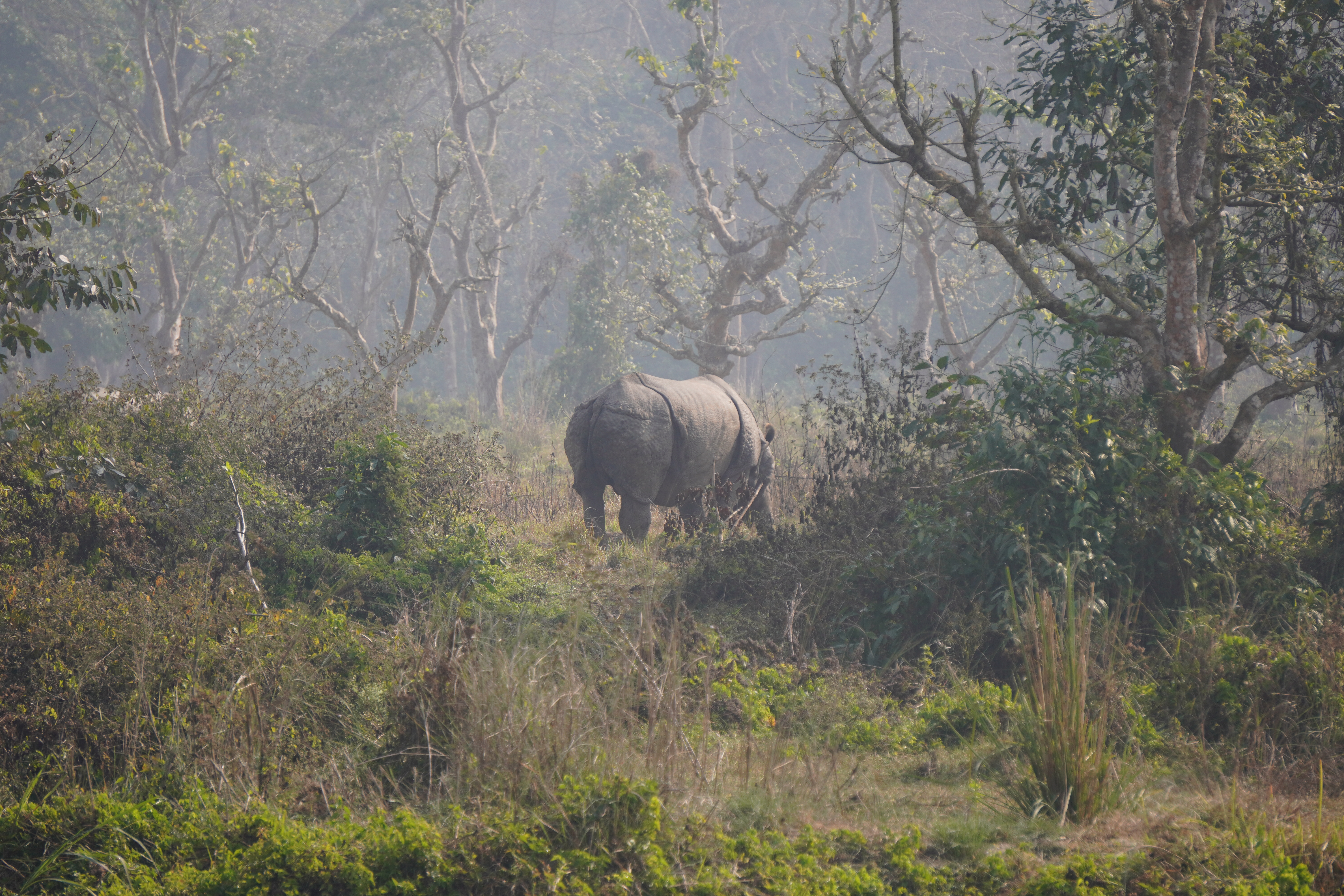
They are such strange, magnificent creatures. Huge and prehistoric-looking and oddly elegant despite all evidence to the contrary. That was one of those proper travel moments where you look at each other afterwards and go, did that actually just happen?
The jeep safari later was fine, but if I am honest, the canoe was better. We saw boar, monkeys, deer, all of that, but the quiet of the morning river and the rhinos had already stolen the show.
Bhaktapur – stepping back into history
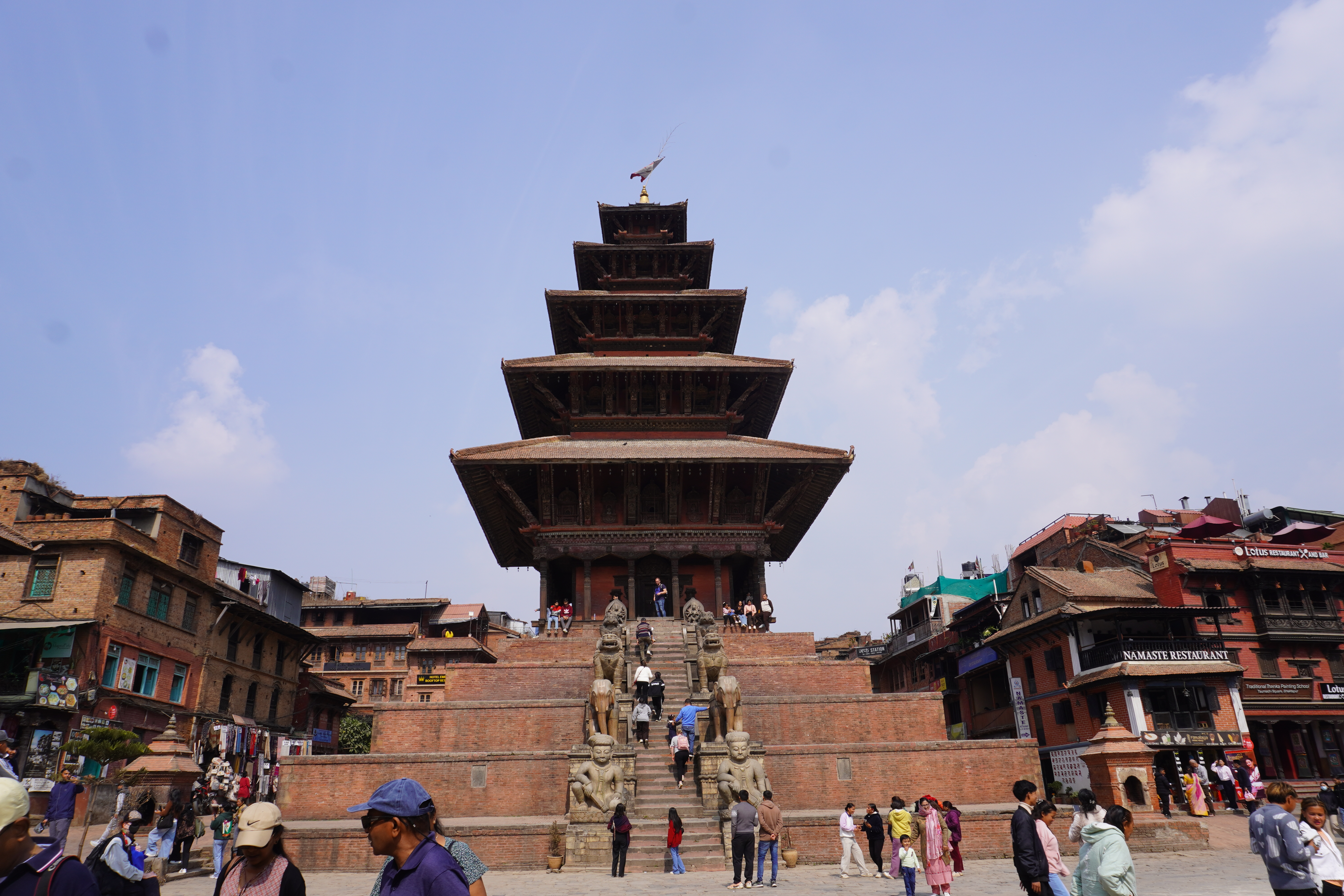
Back near Kathmandu, we visited Bhaktapur, one of the old kingdoms of the valley, and I loved it.
The wood carving there is extraordinary. We saw the famous Peacock Window, survived the aftermath of my wanting to photograph approximately every carved doorway, and wandered through squares that felt old in a properly textured way, not in a sanitised heritage-site way.
There were families making pottery out in the open, wheel after wheel turning, clay everywhere, people just getting on with it. Again, that sense of continuity. Craft not as performance, but as work and livelihood and tradition all tangled together.
Bhaktapur had that lovely quality of feeling deeply historic without feeling dead.
Final night in Kathmandu
By the end, we were back in the tourist part of Kathmandu, wandering the busy streets, watching the power flick on and off, weaving through shops selling cashmere and trekking gear and all manner of things nobody technically needs.
It was Valentine’s night, which felt quite funny because romantic city breaks are not really our brand at this point. We went back to a restaurant we had already been to, got handed free shots because apparently that was the vibe, I ordered momos because of course I did, and Darryl got a steak.
It was not glamorous. It was not polished. It was not one of those travel moments designed to make other people jealous.
It was just us. Tired, happy, full of food, at the end of a trip that had given us far more than I expected.
Impressions of Nepal
Nepal surprised me. It was richer, more spiritual, more varied, and more emotionally textured than I had anticipated.
It gave us mountains, but not always when we asked for them. It gave us caves, monkeys, stupas, rhinos, blessings, old squares, clouded-out viewpoints, peaceful lakes, cultural performances, and one of the most memorable plane rides of my life.
It also reminded me of something I keep learning over and over on this trip: places do not have to be easy to be wonderful.
Nepal was not slick. It was not always comfortable. It did not hand itself over neatly. But it was layered and alive and fascinating, and I came away feeling like we had only just scratched the surface.
I would go back in a heartbeat.
Just maybe next time with the van.
 The Peterson Odyssey
Leave a comment