

SRI LANKA
I read The Seven Moons of Maali Almeida while moving between Sri Lanka’s hill country and its coast, between mist-draped tea plantations and long stretches of luminous shoreline. The physical beauty of the country is almost overwhelming. It would be easy, as a visitor, to rest in that beauty and let the past blur at the edges.
Karunatilaka does not allow that.
The novel is set against the violence and corruption of Sri Lanka’s recent history, a period within my own living memory, though distant enough geographically that it is tempting to simplify or overlook. Ethnic tensions, regional divides, government corruption, disappearances, war: these are not historical footnotes but defining forces. While Sri Lanka feels stable now, the novel is a reminder that stability is recent, and hard-won.
The premise is brilliantly conceived. Maali Almeida, a war photographer, is dead, and has seven moons to discover how he died. The structure leans into the supernatural, but it never feels indulgent or obscure. Readers who enjoy magic realism will find the transition into the afterlife entirely accessible. The ghost-as-detective device gives the narrative propulsion while allowing the political horror of the period to surface gradually.
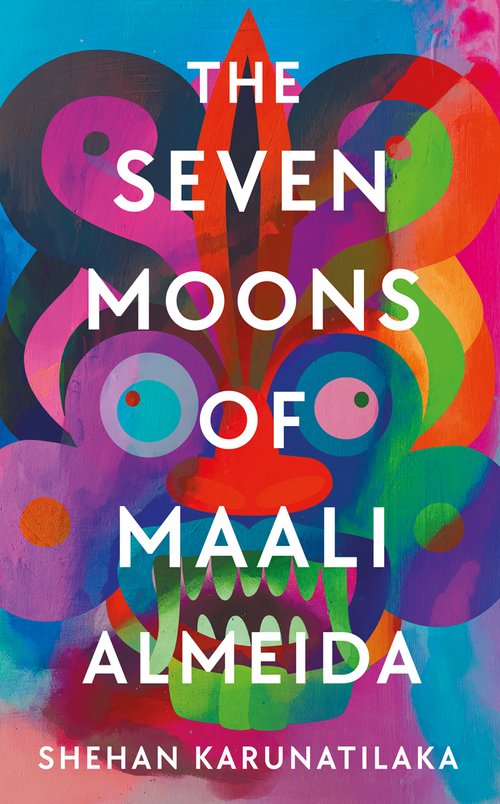
Maali himself is both loveable and deeply flawed. His wit and sharp observational eye draw you in immediately. I was hooked from the opening line. Yet his moral ambiguity, particularly in relation to those he claims to love, makes him difficult to admire. There is selfishness and evasion in him. And yet, as the story unfolds, he grows on you. His contradictions feel human rather than contrived. In many ways, his personal evasions mirror the broader culture of silence and complicity the novel explores.
What struck me most was how readable it all is. The history is complex. The alliances and betrayals are layered. But I was never disoriented, never confused. The writing is so assured that even as the narrative moves between the living and the dead, between political factions and personal reckonings, it remains clear and gripping.
Reading this while travelling through Sri Lanka sharpened the contrast between landscape and memory. The green hills and soft beaches are undeniably real. So too is the violence that shaped the nation not long ago. It is easy, as a tourist, to photograph beauty. This novel insists on remembering what lies beneath it.
Ambitious, darkly funny, and politically unflinching, this is a novel that lingers long after the final page.
Rating: ★★★★★

 The Peterson Odyssey