

India
I finished The Covenant of Water while we were in Chennai — a city that still carries echoes of its older name, Madras. Reading a novel so deeply rooted in Kerala and southern India while physically in the region added a quiet layer to the experience. The geography wasn’t abstract to me.
Verghese spans nearly seventy years, following interconnected families across generations. The novel moves through waterlogged landscapes, inherited secrets, migration, medicine, and love. It is expansive without feeling sprawling, anchored in intimate domestic moments while also tracing political and social shifts in twentieth-century India.
One of the aspects I appreciated most was the depiction of India’s ancient Christian communities. It’s a side of Indian history that many outside the country rarely consider. The story quietly reframes assumptions, reminding the reader that India’s religious landscape has always been layered and complex. That thread added depth and texture, especially as we walked through churches in Chennai and glimpsed traces of colonial and pre-colonial Christian history woven into the city.
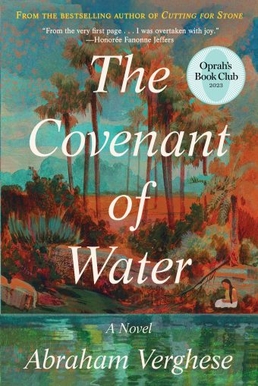
The research underpinning this novel is formidable. Verghese’s medical background is evident, but never heavy-handed. The portrayal of leprosy in particular is handled with enormous empathy and restraint. It would have been easy to sensationalise; instead, it is human, dignified, and quietly devastating. The agricultural details and social history are similarly well integrated. You feel the land, the monsoons, the labour.
That said, the novel is marked by repeated tragedy. There are many losses, some abrupt, some unexpected. At times I found myself wishing that the emotional build-up to these moments had varied more. Several pivotal events arrive with a kind of narrative suddenness that left me slightly detached rather than overwhelmed. Given the sweep of the story, a little more modulation in how tragedy unfolded might have deepened the impact.
Still, the ambition of the book is undeniable. It is a family epic, but it is also a story about inheritance — of illness, of belief, of silence, of resilience. Water becomes both literal and symbolic: life-giving, destructive, binding generations together.
Reading this in Chennai sharpened my awareness of how place shapes narrative. Even when the setting shifted elsewhere in India, I could feel the humidity, the proximity of water, the weight of history pressing in from the margins.
This isn’t a light read. It asks for time and attention. But it rewards both.
Rating: ★★★★☆

 The Peterson Odyssey
