

India
I read Missy while in Chennai, a city of layered histories and quiet hierarchies. Having also spent time in Chicago, I felt unusually well positioned for a novel that moves between Tamil Nadu and the American Midwest. I even found myself scanning the city for the convent where Missy was raised, unsure whether it exists beyond the page. The geography never felt abstract.
At its centre is Missy herself, forced to flee her position in a wealthy Tamil household and rebuild her life in the United States. Without giving too much away, the novel threads together mystery and family drama, but its real strength lies in its emotional and social insight. Rao captures caste, class, and hierarchy not as grand political statements but as lived realities: embedded in tone, in silence, in who stands where and who speaks when.
Shame is a powerful undercurrent throughout. So too is love, particularly the complicated, aspirational love of parents. The novel gently examines both the American Dream and the particular dreams Indian parents hold for their children. Security. Status. Respectability. Opportunity. These ambitions are not always aligned, and the tension between them drives much of the story’s emotional weight.
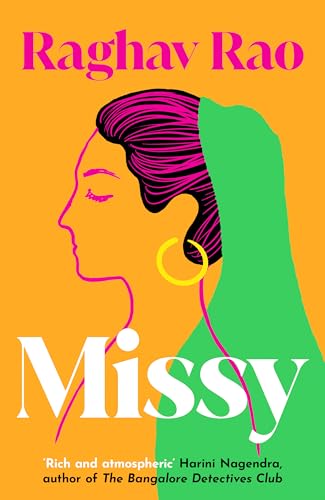
One of the aspects I appreciated most was Rao’s depiction of migration. Missy’s life in Chicago is not a clean break from her past. Culture travels. Hierarchies travel. The unspoken structures of class and caste do not dissolve at immigration control; they reassemble in new forms. There is an inevitable friction between inherited values and those of the new home.
For Missy’s daughters, the experience is different. Their identities are formed squarely in America. Their connection to India is mediated, inherited, sometimes tenuous. Rao captures well that particular first-generation negotiation — belonging fully to neither place, yet shaped by both.
Missy herself is a formidable presence throughout. There is steel in her from the beginning, but her character arc remains satisfying. She evolves without losing the core of who she is. The mystery element keeps the pages turning, yet it never overwhelms the relational dynamics at the heart of the novel.
Reading this in Chennai sharpened my awareness of the subtle codes embedded in everyday life — who belongs, who serves, who decides. The novel made those codes visible, and then showed how they echo even thousands of miles away.
A compelling, thoughtful, and surprisingly quick read.
Rating: ★★★★★

 The Peterson Odyssey