
NEPAL
I read Darkmotherland while travelling through Nepal on long, winding drives along roads that could clearly use more investment, in Nagarkot waiting for Mt Everest to pop through the clouds, and on a quiet balcony overlooking the lake in Pokhara.
It is a novel about a country shaken by catastrophe and reshaped by power, and reading it at a time when Nepal had only recently emerged from the so-called “ginger revolution” of late 2025, just weeks out from a national election, made its themes feel less speculative and more immediate.
Samrat Upadhyay sets his story in the aftermath of a devastating earthquake. In the chaos that follows, an autocratic leader known as PM Papa, nicknamed the Hippo, seizes control through a coup, promising stability while consolidating power. Curfews tighten. Propaganda hums. Fear becomes ambient. The rupture is geological, but also political and moral.
At the centre of the novel is Kranti (whose very name means revolution) the daughter of a dissident academic known as Madam Mao. Her life intersects with Bhaskar, heir to a wealthy family aligned with the regime, and their relationship becomes one of the many fault lines through which the country’s tensions play out. Running parallel is Rozy, the genderqueer lover of PM Papa, whose arc is among the novel’s most compelling and surprising. When Rozy returns to their birthplace which I imagined as Pokhara, I was reading from a balcony overlooking the lake. The setting felt almost disconcertingly real.
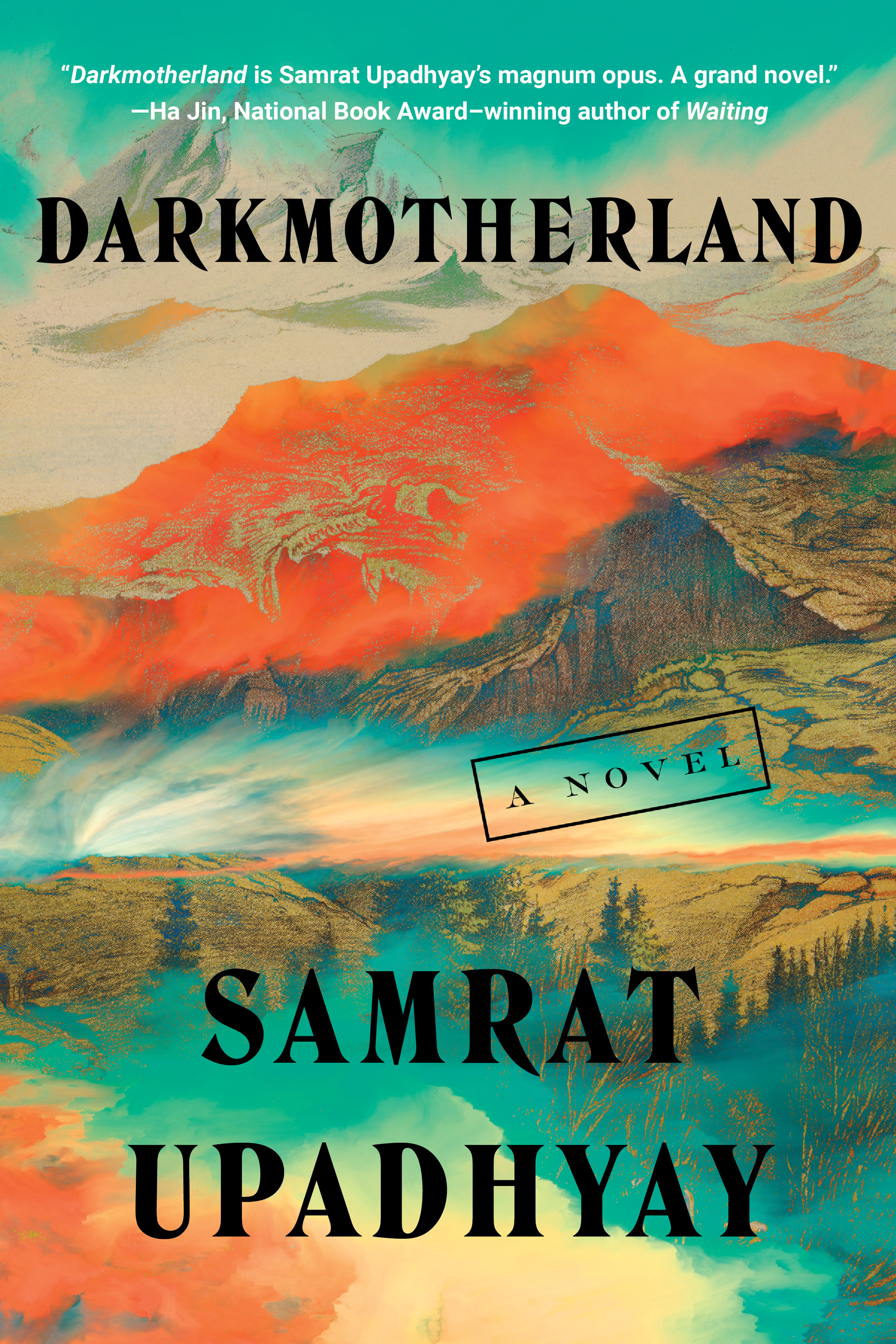
What makes Darkmotherland so powerful is its refusal to separate the personal from the political. Family loyalties, romantic entanglements, ambition and fear are all inseparable from the state’s machinery. Power seeps into kitchens and bedrooms as readily as it occupies parliament.
The novel gradually tips into dark magic realism, and I frickin loved it. I’m drawn to that genre, and here it feels earned rather than ornamental. When the earth has shifted and institutions have fractured, reality itself feels porous. The supernatural elements deepen rather than distract from the political critique.
Being in Nepal while reading this sharpened its impact. We learned more about Hinduism during our time here, and the novel’s invocation of the dark mother — and the reverence and fear surrounding her — resonated more deeply because of that context. The religious imagery is embedded in cultural psyche and political symbolism alike.
It is a dense, heavy read. It took me days, and I imagine the physical book carries some weight in the hand as well as the mind. But it is worth persevering. The writing is rich, layered, and assured; I was never confused, only immersed.
Travelling through a country in relative calm, yet aware of how quickly things can shift, made this story feel both cautionary and intimate. Nepal is breathtakingly beautiful. It is also politically and historically complex. Darkmotherland insists you hold both truths at once.
Rating: ★★★★★

 The Peterson Odyssey