

NEPAL
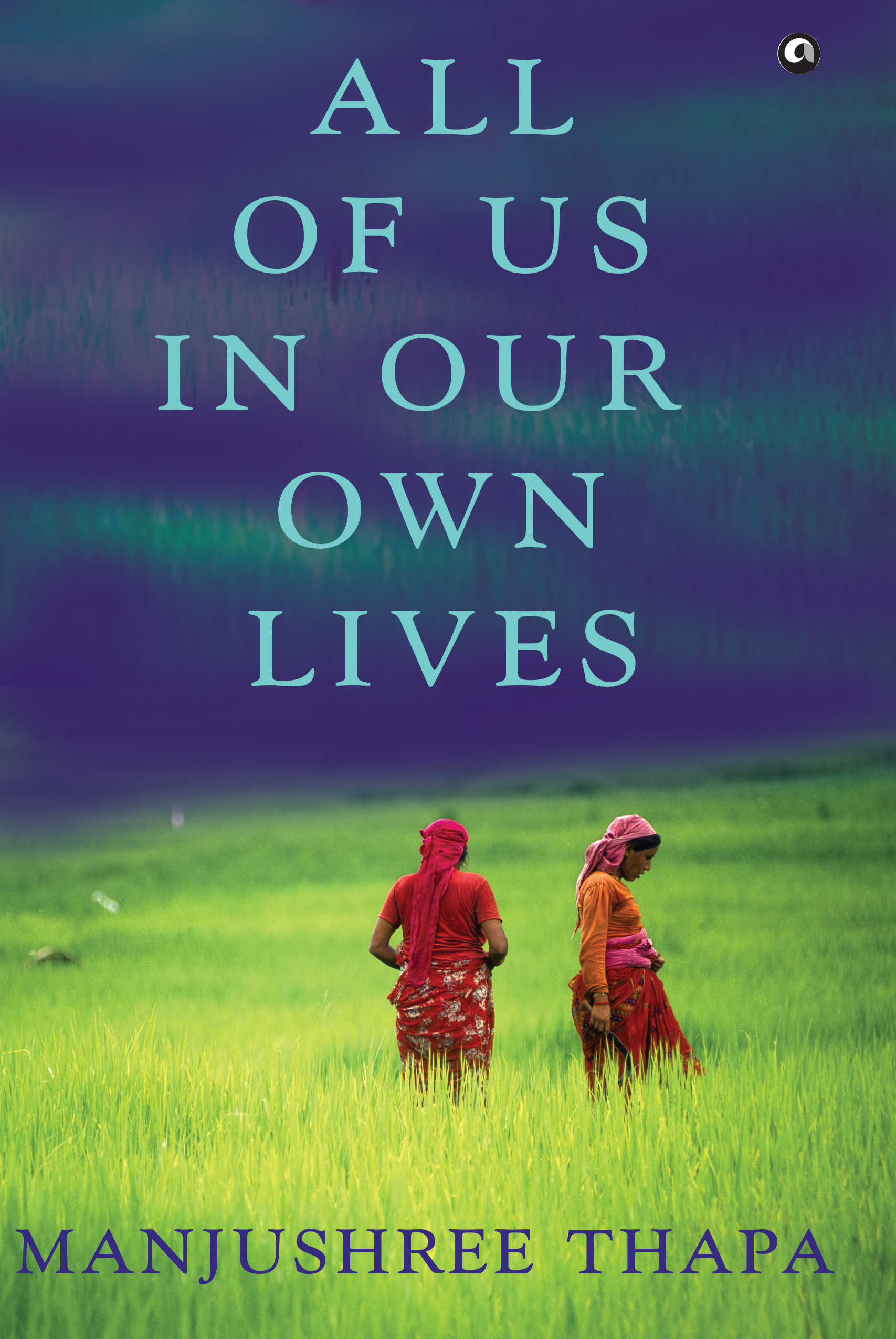
Manjushree Thapa’s All of Us in Our Own Lives unfolds across contemporary Nepal and the wider world, tracing the intersecting lives of Ava Berriden, Indira Sharma, Sapana Karki, and Gyanu.
Ava, adopted from Nepal and raised in Canada, returns to Kathmandu as an adult, working in international aid after stepping away from her corporate legal career. There she encounters Indira, an ambitious and politically astute gender specialist navigating the NGO world, and Sapana, a young woman from a rural village whose aspirations shape her family’s future. Their lives intersect through development work, ambition, and the quiet but powerful question of belonging.
For me, the novel’s most compelling thread was Ava’s reckoning with identity. There is something deeply poignant about what can be lost in adoption — language, history, context — even when a child is raised with love and opportunity. I have friends adopted from other parts of the world into Western families, and Ava’s tension felt recognisable. She rejects aspects of her Nepali identity in her youth, much to her adoptive family’s disappointment, yet feels the pull back to Kathmandu during a moment of personal crisis. That gravitational return rang true.
Thapa captures Ava’s fear and culture shock with nuance. Kathmandu is not romanticised. The corruption woven through aspects of the NGO and aid sector is rendered with a steady hand. I do not know how universally representative this portrayal is, but it resonated with many of the conversations we had while travelling in Nepal. As one of the poorest countries in Asia, Nepal relies heavily on outside support, something our guides spoke about openly as they described the long rebuilding process after the 2015 earthquake. The novel holds that dependence up to the light, examining both its necessity and its distortions.
Gyanu’s storyline adds another vital layer. Like many Nepalis, he leaves home to work in the UAE, chasing economic stability for his family. His conditions abroad are not horrific (and they easily could have been) but the cost is relational. Distance alters connection. When he loses his job after returning home to grieve his father, the fragile balance between earning and belonging becomes painfully clear.
I was reading these chapters as we visited Pashupatinath Temple. Our guide explained the cremation rituals performed along the river and the responsibilities of a son in the grieving process. To be reading about Gyanu navigating filial duty while standing in a place where those rituals were unfolding before us felt almost surreal. This is exactly what I had hoped this reading-around-the-world project would do: collapse the distance between page and place. The story and the setting illuminated one another.
Juxtaposed against the bureaucratic manoeuvring of the NGO world is the pride and entrepreneurial spirit of village women, particularly through Sapana’s leadership. Their agency matters. Their ambition matters. The novel suggests that development is not simply something done to a country, but something shaped from within.
Quieter than some of the other Nepali fiction I read on this trip, this novel is nevertheless incisive. It lingers in questions of identity, obligation, migration, and dignity. Reading it in Nepal — watching grief rituals, hearing about remittances, learning about reconstruction — made it feel less like fiction and more like layered reality.
Rating: ★★★★½

 The Peterson Odyssey