
One thing that Darryl and I know how to do is stretch our travel money. We aren’t super cheap, and never forgo activities because we think we can’t afford it, but why spend money unnecessarily?
Flights and insurance:
I check all flights through Skyscanner; sometimes taking a more circuitous route, or flying on an airline which may not be your most preferred option, can save you heaps of money. By flying through Abu Dhabi on Etihad to get to London in 2014, I saved about $800 one way compared to the same flight on either Air NZ or Singapore. Booking flights online is super easy and often less hassle than booking through a travel agent.
Insurance is one of those things that I have two rules about. If I’m going travelling somewhere close by, like Australia or the Pacific Islands, I usually don’t bother with travel insurance. However I always take insurance for other destinations. Given that we travel often, we have complemtary comprehensive travel insurance for 120 days per annum with our credit card (from ASB Bank). All we need to do is book at least 50% of the flights/travel using the card. I’m also pleased that we have never needed it!
Eating:
- Supermarkets
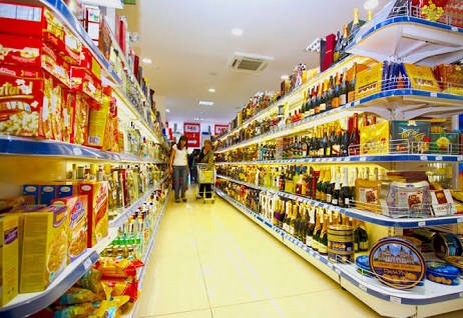
These can be your best friend and it is easy to pack a picnic lunch. We have great memories of trying to figure out what the different foods in Poland, Russia or Vanuatu were. A picnic lunch means that you can take some time out from sightseeing, find a cosy spot and enjoy being in your surroundings.
Cons – you may have to carry the items with you, which could be a pain with some museums or sites
- Eat where the locals eat
Tourist traps are not the best place to eat. I have had some of my worst Italian dining experiences in the Piazza Navona – the service was rubbish, the food average, and the bill was astronomical! Yet many travel guides and blogs recommend this as one of the must dos. How bizarre! Instead, ask the locals where there is a good place to eat. Go off the main roads and away from the tourist traps. For instance, we’ve had some of our best meals in Rome in a little restaurant where you get served your meal on cafeteria trays and are surrounded by the local truck drivers. I’ve never had such succulent eggplant. In Budapest, we had a meal at a former soviet cantina where, back in the day, the world’s second Gutenberg printing press used to reside- goulash and history all in one! Amazing.
Cons – it can be hit and miss!
Accommodation:
Why spend most of your money on accommodation? All I need is a bed and a clean bathroom. We choose to either stay at camping grounds (we’ve camped through England, continental Europe, and North America), hostels or hotels off the beaten path.
- When in Rome in 2008, we stayed at a hostel booking a room for three people and ended up at a small scale hotel with an ensuite bathroom, mini-fridge and TV – all for the price of a hostel. Because it was around the Termini area, we had all amenities close by.
- If you are staying in a hotel, stay a few suburbs out of the main centre. We stayed in Bercy in Paris, a few stops down a metro line from Chatelet-Les Halles, and saved about $250 NZD. We were only in our hotel to sleep so a basic set up worked for us, we had a supermarket next door, and were staying amid a Parisian neighbourhood so got a feel for how people live in the city.
- When we spent a month in North America, camping saved us thousands of dollars; all of the camping grounds (bar one) had great facilities, clean bathrooms and usually have great amenities for children (the pool in the camping ground outside of Washington D.C. was a godsend in the 40 degree heat).
Cons – camping, you have a great deal of gear, and will have to stay out of the city centre. Hostels, you can never pick your neighbours! Staying outside of the main locations may result in some additional daily travel
Sightseeing:
- Walking tours:
These are one of my favourite travel activities. Unlike prebooked tours, with a fixed price, these walking tour guides have to earn their keep as they work for tips. We’ve done these throughout Europe (Berlin, Budapest, Munich, Paris, London, Rome, Copenhagen) and North America (Boston, New York, Philadelphia, Washington D.C.) Companies that we’ve used are Sandemann’s New Europe tours in Europe and Free Tours by Foot in the US.
Cons – sore feet!
- Follow the apps:
Technology means that you have multiple guidebooks at your finger tips. Each place you visit will have the thing(s) that make them unique and it is possible to act as your own tour guide.
When we were in Chicago, we used a walking tour app to guide us through the city’s architecture and sculptures. I think it cost approx. $6.99 for the app and it gave us about 5 hours of fun. In Moscow, we followed a guide (from a website) to Moscow’s underground stations, known as the palaces of the people, and used this info to explore a rich par to the history of the city, all for free.
Cons – you spend a lot of time looking at your phone and miss the places you are visiting!
- Free entrance or free events
Researching where you are going before you leave is essential. Some museums or archaeological sites offer free entrance on certain days or certain times. What a money saver for those exploring lots of museums or if you have a lot of people to pay for. We went to the Louvre on a free day and saved about €30!
Local visitor’s centre have the most up to date information about what’s on – we found out some cool activities to do in Toronoto when we were there on Canada day. This info was not that easily found online and we had a great day chilling out with the locals down on the water front amid the bands and food stalls.
- Discount websites
Sign up to the local Groupon (or equivalent) for your destination(s) prior to leaving. You may find a discounted price for the thing that you absolutely had your heart set on doing. Why pay full price?
Know yourself and your travel style:
It is really easy to read the top 10 or most desirable attractions and make a plan around those but if they are really not going to float your boat, don’t follow the crowds. For me, I love museums, wandering cities, eating, being on the water (or in it) and anything historical. I don’t like zoos, hiking, or drinking excessively. Therefore, I wouldn’t waste my money or time on anything like this.
And knowing what we like informs our travel planning. For instance, we chose to spend time in San Francisco rather than L.A. in 2012. The rich culture and art scene, as well as the multicultural, historic parts of the city were the draw card, rather than beaches, following Hollywood celebrities, and proximity to theme parks that you get in L.A. It’s too easy to spend money doing the things you think you should do, rather than doing what you have always dreamed of!
Keep track of your money:
This isn’t really a stretching technique but without this we would be lost. Darryl tracks our cash spending on fluctuating costs, such as petrol. We try to use our coins where possible (as you can’t change these over) and, with the exception of large purchases or online bookings, pay for everything with cash. If we save money one day, through a cheap meal or free event, we splurge if a cool opportunity comes up.
What are your tips to make the most of your travel money?

 The Peterson Odyssey